
Graviton Technology is the single most expensive research click in OGame — and the only one that gates an entire ship class. Level 1 costs 300,000 energy produced simultaneously the moment you hit Research, which means months of conventional play can be compressed into hours on a speed server, but the preparation is identical regardless of universe multiplier. Nail the satellite farm, hit the safety window, and you walk away with the Deathstar (RIP); fumble either, and you watch your solar satellites evaporate into a debris field you cannot collect fast enough to matter. This guide walks every step from energy planning to your first RIP launch.
The Most Expensive Click in OGame

Every other technology in OGame scales with your existing infrastructure — you build labs, you raise the level, you wait. Graviton Technology breaks that pattern entirely. It has no metal, crystal, or deuterium component; instead it demands 300,000 energy units produced at the exact instant the research completes. The game checks your total energy production across all planets simultaneously. If you fall one unit short, the research simply fails and your resources are gone regardless.
That number is non-negotiable and does not scale with universe speed. Graviton 1 costs 300,000 energy on a 1x server and 300,000 energy on a 200x server. The only thing speed multipliers change is how fast you can farm the deuterium to fuel those satellites and how quickly your research lab chain can compress the lab time. On standard servers, players routinely spend six months or more working toward this moment. On OGames speed universes, determined players reach it in days.
Why bother? Because Graviton Technology is the sole prerequisite for the Deathstar, sometimes called the RIP (Rest in Pieces — the fate of anything it targets). At full tech, the RIP fires a graviton cannon capable of instantly destroying any ship in the game, including other RIPs, and its staggering hull and shield values make it the ultimate anchor of any serious fleet. A single RIP changes alliance politics. A fleet of them ends them.
Understanding this mechanic is essential background for anyone serious about planning their OGame research path toward end-game dominance.
How Graviton Research Works
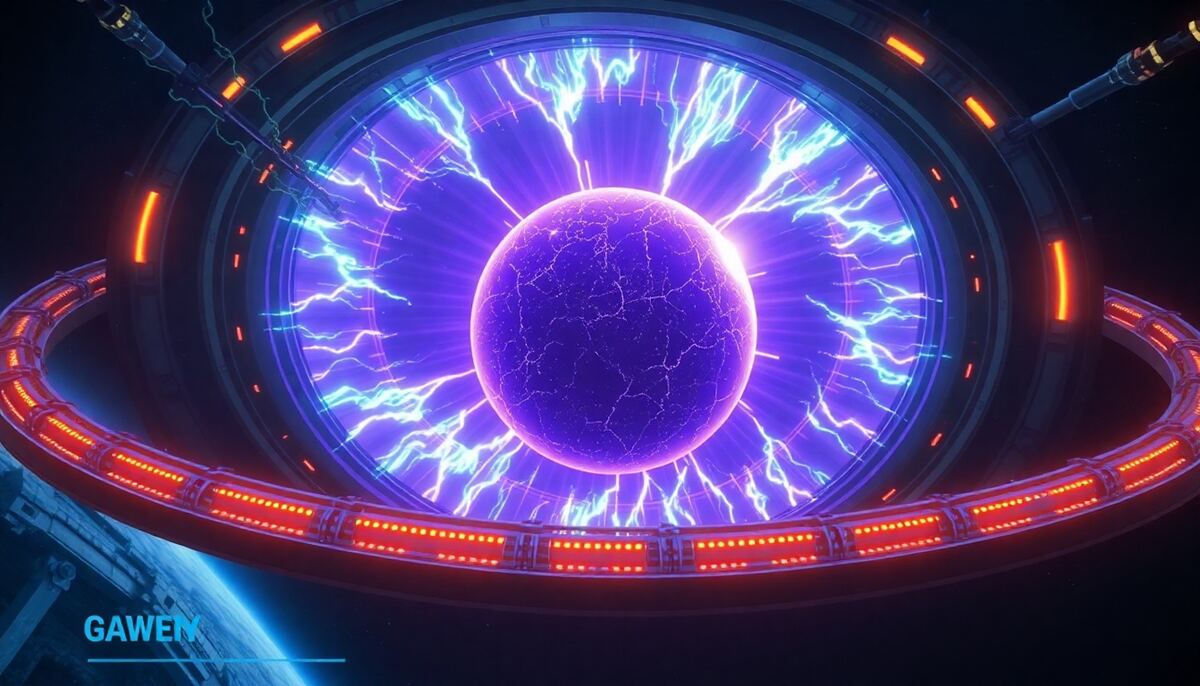
Graviton Technology functions differently from every other research in the tech tree. The energy cost is a production check, not a resource cost. You do not spend energy the way you spend metal — the game reads your current total energy output, compares it to the required threshold (300,000 for level 1, scaling upward for higher levels), and either allows or blocks the research.
The practical consequence is that you must engineer your colonies specifically for this moment. There is no way to "save up" energy. You cannot bank excess production over several days. The only variable that matters is your instantaneous energy output at the precise moment the research timer hits zero.
Higher Graviton levels follow an exponential cost curve:
- Level 1: 300,000 energy (unlocks Deathstar construction)
- Level 2: roughly 900,000 energy
- Level 3: ~2.7 million energy
- Each level multiplies the previous by approximately 3
Beyond level 1 the research provides a minor combat bonus — a small percentage increase to graviton weapon effectiveness — but the overwhelming strategic reason to push past level 1 is niche min-maxing. The vast majority of players stop at level 1, build their Deathstars, and never look back. If you are invested in the full tech tree, understanding energy and hyperspace mechanics together gives you the complete picture of late-game research economics.
One critical detail: Graviton research requires a Research Lab at level 12 minimum. On top of that, many players use the Intergalactic Research Network (IRN) to link labs across planets and effectively multiply the lab level used for research calculations, cutting research time dramatically. On speed servers with boosted research multipliers like OGames Nebula (198x) or Proxima (400x), even a modest lab chain reduces Graviton research time to near-zero in absolute terms — but the 300,000 energy threshold remains unchanged.
Satellite Farm Engineering
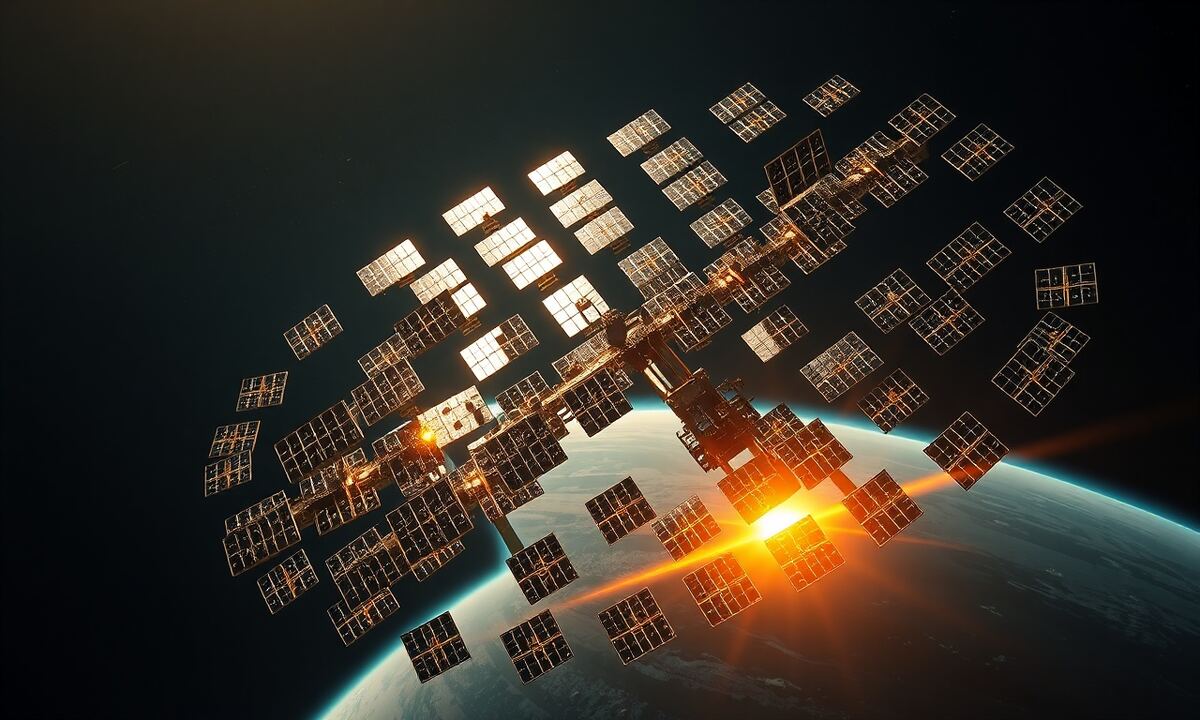
The practical path to 300,000 energy is a dedicated satellite farm. Solar satellites in OGame produce energy proportional to the solar intensity at their planet's position (slots 1-3 highest, slots 7-9 lowest, with the exact formula being roughly solar_intensity × 0.01 energy per satellite, rounded). For maximum output, you want satellite colonies as close to the sun as possible — slot 1 or slot 2 planets in the innermost system positions.
Here is realistic satellite math for a slot 1 planet with ~170 energy per satellite:
| Satellites Built | Energy Output | Shortfall from 300k |
|---|---|---|
| 1,000 | ~170,000 | 130,000 |
| 1,500 | ~255,000 | 45,000 |
| 1,765 | ~300,000 | 0 (threshold met) |
| 2,000 | ~340,000 | +40,000 safety buffer |
Most veterans recommend building 10-20% more satellites than the bare minimum calculated from your planet position. The reason: enemy raiders. Satellites have zero defense and zero speed — they are sitting targets. A hostile player who spies your farm colony will see thousands of undefended satellites and salivate. One attack wave and your 300,000 energy threshold becomes 220,000, and your research window is ruined.
The resource cost of satellites is relatively light (metal + crystal only, no deuterium), so overbuilding is cheap insurance. On OGames Proxima with 200x economy speed, farming the resources to build 2,500 satellites from scratch takes a matter of hours rather than weeks. The bottleneck shifts from resource farming to execution timing — which is exactly where the safety window problem comes in.
Some players spread their satellite farms across two or three colonies to create redundancy. If one colony is hit during the window, the remaining colonies might still push total energy over threshold. This complicates your energy calculation but is worth considering if you operate in a contested galaxy.
The Safety Window Problem
The most nerve-wracking aspect of the Graviton push is what happens between "I have 300,000 energy" and "my research timer hits zero." That gap is your safety window — and it is the period when your entire investment is most vulnerable.
Once you commit to Graviton research, the timer is running. Enemy players who monitor your activity score or notice unusual satellite construction can infer what you are planning. A well-timed attack that destroys enough satellites during the research period leaves you with insufficient energy at the moment of completion — and Graviton research does not refund resources on failure. You lose the research attempt entirely, though the lab remains intact for a retry.
Veteran players use several protective strategies:
- Moon shielding: Launch Graviton from a planet protected by a moon. Phalanx cannot see fleet movements from a moon, making it harder for enemies to coordinate a strike. Understanding espionage tech and phalanx mechanics is essential for threat assessment.
- Overnight timing: Start the research so it completes at 3-5 AM your local time. Most server populations dip during overnight hours, reducing the probability of coordinated hostile action.
- Decoy activity: Move other fleets around to obscure your true intentions from alliance rivals watching your activity blips.
- Alliance support: Ask trusted alliance members to monitor your farm colony and report incoming fleets immediately. On OGames, the alliance ACS system allows coordinated defense responses. Fast communication through your alliance channel can mean the difference between a successful push and a catastrophic failure.
- Build excess: As noted above, 15-20% satellite surplus means an attacker must destroy a significant chunk before your threshold is breached. Most opportunistic raiders calculate whether the return on the attack justifies the mission duration, so making the math unattractive deters casual attacks.
The window itself depends on your lab setup and research speed. On standard servers the Graviton research timer can run for many hours. On OGames speed universes the research multiplier compresses this: Nebula (198x research) and Proxima (400x research) reduce the lab time dramatically, shrinking your exposure window to minutes rather than hours. This is one of the most underappreciated advantages of speed-server Graviton pushes.
One timing trick: if your research completes while you are actively online, you can pre-position a fleet on a "hold" mission at your farm colony during the final minutes. This serves as a minimal psychological deterrent and gives you react time if a hostile fleet appears in your scan. It does not stop a determined attacker, but it closes the most casual exploitation window.
Graviton on Speed Universes
OGames runs three universes with different multiplier profiles, and each changes the Graviton experience in meaningful ways beyond the obvious time compression.
In Andromeda (50x economy, 100x research, 50x fleet), the resource accumulation for satellite construction is fast but not instant. A new player joining Andromeda can realistically plan a Graviton push within the first two to three weeks if they follow an efficient build order and participate in expeditions for bonus resources. The 1,000 free Dark Matter weekly and the 5,000 DM signup bonus help accelerate commander access, which in turn boosts production and research speeds through the Engineer and Technocrat characters.
In Nebula (99x economy, 198x research), the research compression is the headline. The lab timer on Graviton research with a solid lab chain can drop below 15 minutes. The real challenge in Nebula is actually the satellite construction time — you need thousands of shipyard runs, and even at 99x fleet speed the sheer quantity of satellites takes meaningful real time to produce. The 10,000 weekly DM and 55%/22% debris field ratios make Nebula a particularly active PvP universe, which means your safety window faces more potential hostiles.
In Proxima (200x economy, 400x research, 200x fleet), everything moves at maximum pace. The 80% ship debris return and 40% moon chance make Proxima the most intense competitive universe on OGames. Graviton pushes happen faster than on any other server — but so do the attacks on satellite farms. Proxima players who attempt Graviton without alliance backing regularly lose their satellite farms to opportunistic rivals. The 20,000 DM signup and 50,000 weekly DM make it easier to build premium defenses quickly, which is one way to protect your farm — but high-level attackers on Proxima often ignore light defenses entirely due to the sheer fleet power in the universe.
Regardless of universe, the astrophysics research path that unlocks additional colony slots is a prerequisite for serious Graviton planning. More colonies mean more potential satellite farm planets and more IRN lab nodes for research speed. Players who rush astrophysics early and colonize aggressively will reach Graviton faster on any speed server.
The full comparison of OGames universes covers speed multipliers and signup bonuses in detail if you are still deciding where to start.
After Graviton: Your First RIP
Graviton research completes. Your energy check passed. The Deathstar is now available in your shipyard. What happens next is where most new Graviton researchers make their first mistake: they build one RIP immediately and wonder why it feels anticlimactic.
A single Deathstar is a political statement, not a weapon. It tells the server you have arrived, and it attracts attention — some of it hostile. One RIP is also fragile in a way that surprises new owners: despite its enormous combat stats, a well-coordinated attack by an alliance with sufficient Battleships and Bombers can crack a lone RIP if the attacker brings enough hull to absorb the graviton cannon's shots before they run out of targets.
The minimum viable Deathstar fleet for actual offensive operations varies by target type, but veteran consensus suggests:
- 3-5 RIPs for clearing moderately defended inactive planets
- 10+ RIPs for serious active player combat where the target has fleet support
- Paired with Battlecruisers or Destroyers as chaff absorbers — the RIP's graviton cannon fires last in combat, so cheap ships buying it additional rounds dramatically increase effectiveness
Production planning for RIP construction should begin before your Graviton push. A Deathstar costs 5,000,000 metal, 4,000,000 crystal, and 1,000,000 deuterium at base. On Proxima with 200x economy, farming that in advance is trivial. On Andromeda it requires deliberate resource management over several days. Start stockpiling before you even build the satellites.
Your first RIP should also be housed at a moon-protected planet if possible. A naked planet RIP is visible to phalanx from any moon in the same system, making it trivially easy for enemies to time a strike when your RIP is sitting unprotected. Review your moon coverage across your colonies before choosing where to base your new Deathstar fleet — the drive technology guide covers hyperspace drives that power the RIP's movement, which at base speed is notoriously slow and makes recycling timing critical after combat.
Finally: the moment you have a RIP, you become a target for other players who want the debris field. A destroyed RIP generates an enormous debris field. Protect your investment with a solid fleet save routine, ideally using expeditions or deployment missions to keep your capital fleet off-planet during server low-hours. The weapons, shielding, and armour tech guide covers how to maximize your RIP's already-formidable combat stats through research investment.
FAQ
Do I lose my resources if Graviton research fails the energy check?
Yes. If your energy production is below 300,000 at the moment the research timer completes, the research attempt fails and the research resources are consumed. You do not receive a refund. This is why overbuilding satellites and protecting your farm colony during the window are so critical — there is no safety net on failure.
Can I use fusion reactors instead of solar satellites for the energy check?
Technically yes, but practically no. Fusion reactors provide stable, attack-proof energy, but the energy-per-building ratio is dramatically lower than solar satellites at equivalent deuterium costs. Building enough fusion reactor capacity to hit 300,000 energy would require enormous infrastructure investment across multiple colonies. Solar satellites remain the overwhelmingly dominant strategy precisely because they produce large amounts of energy cheaply and quickly, even though they are vulnerable to attack.
Does Graviton Technology level affect the Deathstar's graviton cannon damage?
Yes, each level of Graviton Technology beyond level 1 provides a small bonus to the graviton weapon's base attack power, similar to how Weapons Technology boosts all ships. However, the bonuses are modest compared to the exponentially increasing energy costs for higher levels. Nearly all competitive players stop at Graviton 1 and invest their energy production into other pursuits. Min-maxing Graviton beyond level 1 is reserved for players who have already exhausted most other research paths.
How fast can I reach Graviton on OGames Proxima compared to Andromeda?
In Proxima (200x economy, 400x research), a dedicated player with strong early colonization can reach Graviton within the first week of play, assuming they prioritize lab levels, colonize a slot 1 or slot 2 planet for satellite farming, and have alliance support during the safety window. In Andromeda (50x economy, 100x research), the same player would typically take two to four weeks under similar strategic conditions. The 50,000 weekly DM in Proxima also accelerates commander and premium feature access, which compounds the speed advantage.
Should I announce my Graviton push to my alliance?
Yes, with caveats. Trusted alliance leadership should know in advance so they can coordinate defensive support and monitor your farm colony for incoming hostiles. However, broadcasting your intent to the wider server is counterproductive — it invites exactly the kind of coordinated hostile action you want to avoid. Share selectively, trust carefully, and keep the timing information within a small circle. In competitive universes like OGames Nebula and Proxima where active PvP is constant, operational security around your Graviton push can matter as much as the satellite math itself.
Ready to start your Graviton journey? Register on OGames and choose the universe that matches your pace — whether you prefer Andromeda's measured progression, Nebula's mid-speed combat, or Proxima's full-throttle warfare, the road to your first Deathstar starts with your first login.