
If you played OGame seriously between 2006 and 2015, you already know whether the itch is back. It comes every few years — a memory of that satisfying ping when your fleet returned loaded with resources, or the adrenaline of watching a spy report on a 20-million-point player's undefended planet. The short answer to "should I come back?" is yes — but not to retail OGame. Veterans who return to 1x classic servers almost universally quit again within two weeks, suffocated by the same grind that eventually drove them away the first time. Speed private servers are where the muscle memory is actually useful, and where a Saturday afternoon gets you further than a month used to.
That Itch to Rebuild Your Empire

Veterans know the feeling precisely: you're watching a documentary about the cosmos, or someone mentions "fleet save," and suddenly twenty browser tabs don't seem like enough. The nostalgia for OGame isn't really nostalgia for a game — it's nostalgia for a specific kind of strategy experience that almost nothing else replicates. The persistent universe, the tension of offline risk, the genuine satisfaction of a perfectly timed attack. Almost no modern game gives you that cocktail.
That itch is completely valid, and the good news is that the core experience that hooked you is fully intact on modern private servers. The same nine galaxies, the same coordinate system [g:ss:p], the same espionage probes crawling across the map, the same decision paralysis over whether to push Combustion Drive or Armour Technology first. If you played from 2007 to 2012, you will recognise roughly 90% of what you see on your first login. The other 10% is pure improvement — more on that shortly.
The bad news is that retail OGame has drifted far from what you remember. Years of monetisation pressure, interface overhauls and mechanical additions have layered complexity onto what was once a clean, brutal strategy game. Many veterans who tried going back to official servers in 2022 or 2023 reported feeling like tourists in a country that used to be home. Private servers strip that cruft away and run the game at a pace that respects your time.
Everything You Remember Still Works
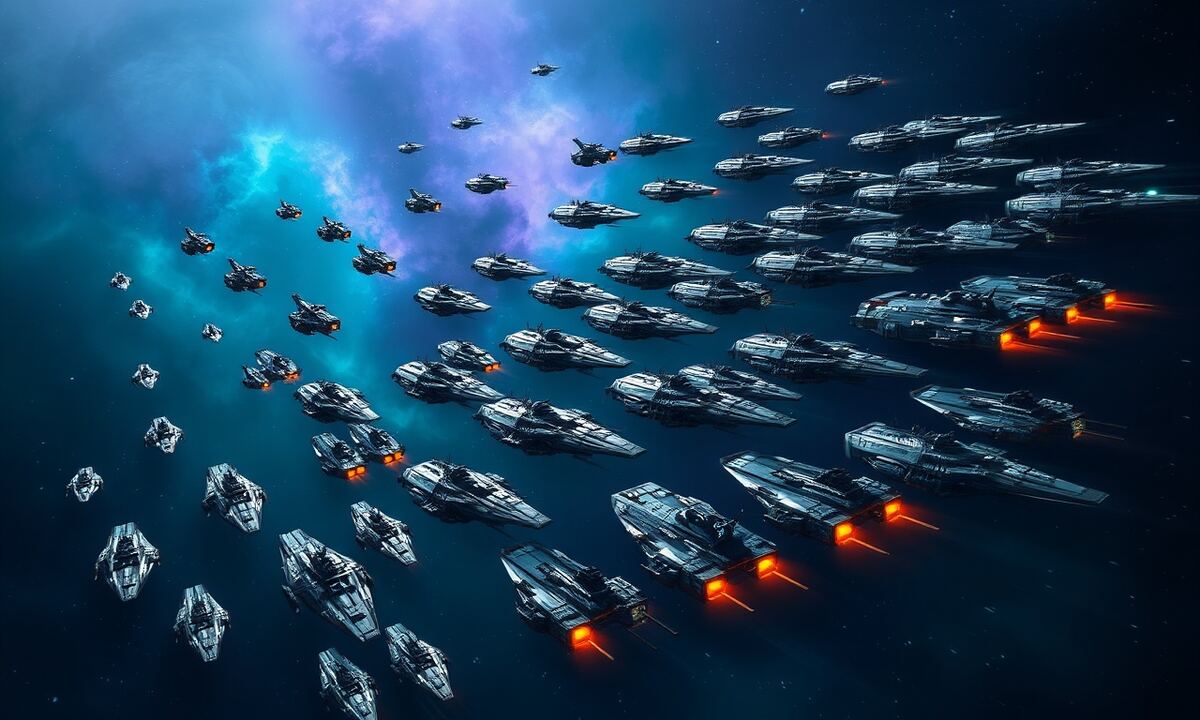
Let's be specific, because vague reassurance is useless to a veteran. The ship roster you memorised is still here: Light Fighter, Heavy Fighter, Cruiser, Battleship, Battlecruiser, Bomber, Destroyer, Deathstar, Reaper, Pathfinder. The economic buildings — Metal Mine, Crystal Mine, Deuterium Synthesiser, Solar Plant, Fusion Reactor, Robotics Factory, Shipyard, Research Lab, Nanite Factory — all present. The defence lineup from Rocket Launcher through Plasma Turret to the Small and Large Shield Domes is unchanged.
Combat still uses the same rapid-fire tables you probably have tattooed on the inside of your eyelids. Cruisers still mulch Light Fighters. Battleships are still the backbone of any serious raiding fleet. Destroyers still eat Deathstars for breakfast at scale. The fleet save mechanic — launching to a distant moon or debris field with a long enough flight time to park your fleet safely overnight — is exactly as you remember and still the single most important skill a returning player needs to re-learn.
Research follows the same dependency tree. You still need Energy Technology 5 before you can unlock Hyperspace Technology, still need Astrophysics to colonise beyond the default planets, still need Weapons/Shielding/Armour Technology to stay competitive in combat. The espionage system works the same way: probe a target, read the report, decide if the loot-to-loss ratio is worth the trip.
Alliances with ACS (Alliance Combat System) still let you stack fleets on a single target — coordinating a 20-person alliance smash on a whale account is still one of the most satisfying things you can do in a browser game. The OGame private server format preserves all of that social warfare completely.
What You Do NOT Remember: The Grind

Here is the thing nostalgia edits out: classic 1x OGame was brutally slow. Not "requires patience" slow — genuinely weeks-to-build-a-Battleship slow. In the old Uni 1 or Uni 40 days you'd start a Metal Mine upgrade on a Monday and it would finish on Thursday. You'd queue a Battleship and wait four days. Researching Hyperspace Drive to level 7 could take the better part of a fortnight. If you came back fresh from that era expecting the warm feeling and forgot the waiting, you're going to crash hard into the reality of 1x again within the first hour.
Adult schedules make 1x even worse than you remember. In 2008 you might have logged in six times a day, micro-managed your production queue and still had time for homework or an early career job. In 2026, with real-world responsibilities — family, demanding work, a commute — you're going to log in twice a day at best. At 1x speed those two sessions accomplish almost nothing. You watch a mine upgrade tick forward 4% and log out feeling vaguely defeated. That's not nostalgia — that's just punishment.
Speed servers solve this with direct multiplication. At 50x economy speed (Andromeda), a building upgrade that would take four days at 1x takes roughly two hours. At 200x (Proxima), it takes minutes. You can go from a fresh colony to a functioning shipyard with your first Battleship queued in an afternoon session. That is the same emotional arc as the original game — the satisfaction of watching your empire grow — compressed into a timeframe that fits between dinner and bedtime rather than between paycheck and paycheck.
Speed Universes Fit Adult Schedules
The three universes on OGames are tiered by speed, so you can match the server to how much time you realistically have. Every universe launched in April 2026, meaning the playing field is level — no one has a two-year head start on you.
| Universe | Economy | Research | Fleet | Free DM / Week | Best For |
|---|---|---|---|---|---|
| Andromeda (Uni 4) | 50× | 100× | 50× | 1,000 DM | Casual returnees, strategic thinkers |
| Nebula (Uni 5) | 99× | 198× | 99× | 10,000 DM | Weekend warriors, active players |
| Proxima (Uni 6) | 200× | 400× | 200× | 50,000 DM | Hardcore veterans, guild-focused play |
For most returning veterans, Andromeda or Nebula is the sweet spot. At 50x economy you can meaningfully advance during a one-hour session. At 99x you can go from a new colony to Battleships in a single focused evening. Proxima at 200x is for players who want to push deep into late-game tech — Deathstar fleets, alliance wars at scale — within weeks rather than years.
Fleet speed matters too. In Andromeda, war fleets fly at 5× the standard multiplier (peaceful missions at 10×, holding at 5×). In Nebula and Proxima those multipliers scale accordingly, meaning raids take minutes and the game's real-time tactical element — the one that had you setting alarms to recall a fleet — actually feels present rather than theoretical. You can play actively rather than just checking in on a slow background simulation.
The universe comparison page breaks down all the numbers side by side if you want to audit them before committing. Picking the right universe is the most important decision a returning veteran makes.
Quality-of-Life the Classic Era Never Had
Beyond speed, modern private servers have features that simply did not exist in OGame's golden era and that veterans will appreciate immediately once they stumble onto them.
Lifeform technologies add a fourth research tree unique to each planet — a colony of biological entities that provides passive bonuses to production, combat or espionage. It's an optional depth layer that veteran min-maxers will love and casual players can largely ignore. It doesn't break the game; it expands the late-game ceiling.
Character classes (Collector, General, Discoverer, Crawler) let you specialise your account from the start. Veterans who want to dominate combat will take General for the fleet speed and combat bonuses. Economic turtles take Collector for the production multipliers. This is the kind of meaningful account identity decision that OGame's early years completely lacked.
The Battle Hall is a hall-of-fame for the universe's biggest battles, publicly visible and sortable. If you crash someone's Deathstar fleet, the record is permanently there. This is the social proof layer the old game needed and never had — your attacks actually mean something beyond your personal scoreboard position.
The Fleet Dealer lets you trade ships between accounts using an in-game marketplace mechanism, adding an economic dimension to fleet management that classic servers never offered. Have a stockpile of Light Fighters you don't need? Convert them to value.
Daily quests and the Academy give you objectives beyond the ambient "build, research, raid" loop. Commanders — purchasable or earnable bonuses — provide quality-of-life improvements like automation of certain queue tasks. The auctioneer and marketplace add resource arbitrage opportunities for players who enjoy the economic side of the game more than the PvP side.
Dark Matter (the premium currency) is distributed freely. Andromeda gives you 5,000 DM at signup and 1,000 every week. Nebula gives 10,000 at signup and 10,000 weekly. Proxima gives 20,000 at signup and 50,000 weekly. Veterans will recognise DM as what used to cost real money in retail — officers, item slots, speed-ups. Here it's just given to you, which fundamentally changes the economic power dynamic between players. No one buys a competitive edge; everyone gets the same free allocation.
The mobile web version means your fleet save calculation doesn't require you to be at a desktop. You can check a spy report on your phone while waiting for coffee, recall a fleet from the train, or queue a research upgrade during a lunch break. This alone makes the game far more compatible with adult life than the desktop-only era you remember.
A Level Playing Field: Universes Launched April 2026

One of the most common reasons veterans quit retail OGame — and one of the most common fears about returning anywhere — is the gear gap. You log in after two years away, and the top 10 players have 500 million points, researched technologies you can't even comprehend yet, and fleets that could vaporise your entire account in a single attack. The gap between "just started" and "competitive" is effectively unclosable at 1x speed without years of investment.
All three OGames universes launched in April 2026. That means every account on the server started from scratch at the same time. The current top players got there through skill, activity and smart decision-making — not through a three-year head start. A veteran who understands the game deeply and plays two or three focused sessions per week can reach the top 100 within months in Andromeda. In Nebula or Proxima, at higher speeds, that timeline compresses further.
Each universe holds up to 5,000 players across 9 galaxies. That is large enough to have a vibrant alliance scene and genuine PvP tension, but small enough that individual players and individual attacks actually matter. You are not lost in a universe of 50,000 accounts where your activity is statistically invisible. Your raids get noticed. Your alliance choices matter. Your score ranking is meaningful.
The debris field rates also favour active players over turtles. In Andromeda, 43% of destroyed ships and 17% of destroyed defence create debris. In Nebula that's 55% ships / 22% defence. In Proxima it's 80% ships / 32% defence. This means combat generates enormous recyclable resources — which rewards the aggressive raiding and fleet warfare playstyle that most veterans actually enjoy.
You can register and compare universes in a few minutes. There is no commitment required to look around, and the first session will tell you immediately whether the muscle memory is still there. It is.
Your First Evening Back: A Veteran's Checklist
If you're going to sit down tonight and actually play, here's what to do in order. This assumes you haven't played in years but the core game is still in your memory.
- Pick your universe first, not last. Read the server comparison, decide your pace, and commit. Andromeda if you want a measured strategic experience; Nebula if you want to move fast; Proxima if you want to go deep on late-game content quickly. Don't spread across multiple universes on your first week back.
- Claim your Dark Matter immediately. At Andromeda signup you get 5,000 DM free. Your first spend should be unlocking an Officer — the Geologist (production bonus) is strongest early, the Admiral (fleet slots) becomes critical later.
- Rebuild your mine priority order. If you're rusty: Metal Mine first, then Crystal Mine, then Deuterium Synthesiser — roughly at a 2:1.5:1 ratio of upgrade priority. Storage buildings matter more on speed servers because production is so fast that you hit caps quickly.
- Set your first colony target early. Astrophysics research pays off faster at 100x research speed than you're used to. Get your second planet queued before the end of your first session. Planet slot 6 or 7 at moderate galaxy position is safe for a starter colony.
- Build probe infrastructure before you raid anything. At speed, targets move resources fast. You need at least 20-30 espionage probes and a solid Espionage Technology level (8+) to read accurate reports before committing a fleet.
- Fleet save from day one. Even on a speed server, leaving your fleet sitting unprotected overnight is how you lose weeks of progress in one enemy attack window. Pick a target coordinate 18+ hours away, calculate your return time, and launch before you close the browser. This habit is non-negotiable at any server speed.
- Find an alliance within your first 72 hours. The community here spans 8 languages and alliances are active. A good alliance provides early intel, coordinated fleet saves, and protection from bashing. Going solo as a veteran is fine strategically, but an alliance makes the social layer immediately alive.
- Use the Battle Simulator before your first major attack. The on-site simulator accounts for server-specific combat parameters. Your old mental models for heavy-fighter-to-cruiser ratios may need calibration on the server's specific combat tech assumptions. Sim it first, then send.
Most veterans find that the first 90 minutes feels like waking up a part of the brain that's been dormant. You'll mis-click a few things, forget that researching something requires leaving the planet view, briefly panic trying to remember where the fleet dispatch screen is. Give it 30 minutes and the muscle memory returns almost completely.
If you want a detailed first-weekend plan, the zero-to-fleet first weekend guide covers the optimal early-game build order in depth, and the free Dark Matter guide shows you how to maximise your free DM allocation across officers and items.
FAQ

Is OGames the same game I remember, or has it been changed significantly?
The core mechanics are faithful to classic OGame — same ships, same buildings, same research tree, same combat system. What has been added are quality-of-life features like character classes, lifeform technologies, the Battle Hall, Fleet Dealer, and an auctioneer. None of these break or replace the original systems; they sit alongside them. The fundamental loop of mine → build fleet → raid → research is completely intact. If you played between 2006 and 2014, you'll recognise the game within minutes.
Do I need to pay anything to be competitive?
No. Dark Matter — the game's premium currency used to unlock officers, speed-ups and item slots — is distributed freely to every player every week. Andromeda gives 1,000 DM per week (plus 5,000 at signup), Nebula gives 10,000 weekly (plus 10,000 at signup), and Proxima gives 50,000 DM per week (plus 20,000 at signup). Every officer, every commander upgrade, every quality-of-life item can be funded from the free allocation. Players who spend real money do not get a mechanical advantage over players who don't. This is a fundamental difference from retail OGame, where DM purchases were a significant competitive factor.
Won't experienced players just destroy me immediately?
All three universes launched in April 2026, so there are no multi-year veterans dominating with 500-million-point leads. The current top accounts got there through smart play over months, not years of compounding head starts. Additionally, most universes have bashing limits in server rules, meaning a single player cannot attack you repeatedly without restriction. Alliance membership provides further protection. Veterans returning to OGames are typically not the targets — fresh accounts with visible large fleets sitting unprotected are. Learn to fleet save properly and you'll be far more resilient than you expect.
What speed server should a returning veteran choose?
It depends on your available time and preferred pace. If you can log in two to three times per day for 20-30 minutes each session, Andromeda at 50x economy is very playable — you'll see meaningful progress every session without feeling overwhelmed. If you have longer dedicated evening sessions a few times a week and want to reach competitive fleet size quickly, Nebula at 99x is the stronger choice. Proxima at 200x is for players who want to push into Deathstar-level content within weeks and are committed to regular activity. Most veterans who are testing the waters after a long absence start with Andromeda or Nebula.
How does espionage and the phalanx system work at high speed?
Espionage mechanics are identical to classic OGame — you send probes, receive a report showing the target's resources, fleet and defences (the detail level depends on your Espionage Technology vs theirs). The phalanx system, available from a moon with a Sensor Phalanx building, lets you watch incoming and outgoing fleets at a target planet within range. At high fleet speed, the information decays faster — a fleet that takes 30 minutes to arrive gives you far less reaction time than one taking six hours at 1x. This makes phalanx intel simultaneously more valuable and more time-sensitive. Veterans who remember the phalanx meta will find it alive and well; the tactics translate directly, just compressed in time.
There has never been a better moment for a veteran to return. The same strategic depth you spent years learning, delivered at a pace that actually respects the life you've built since then, on servers where your experience genuinely matters from day one. Register on OGames and see whether the muscle memory is still there — most veterans are surprised by how quickly it comes back.