
Energy is the one resource in OGame that you cannot mine, trade, or steal — you can only generate it, and the moment production outstrips supply every mine on your planet throttles down in proportion. Choosing the right energy source at the right moment is therefore one of the highest-leverage decisions in the entire game. There are exactly three tools available: the Solar Plant, Solar Satellites, and the Fusion Reactor. Each has a distinct economic profile, a vulnerability window, and a phase of the game where it dominates. This guide does the maths so you do not have to.
The Three Energy Paths at a Glance

Before diving into numbers it helps to understand the fundamental trade-off each path forces on you.
- Solar Plant — a permanent building that costs metal and crystal to upgrade, produces energy from sunlight with no ongoing fuel cost, and cannot be destroyed by enemy fleets. Its production scales with a fixed formula per level and is completely passive once built.
- Solar Satellites — ships that sit in orbit and produce energy proportional to the solar system's position (Galaxy 1 inner slots produce more; outer galaxy positions produce less). They are cheap to build in bulk, instantly deployable, but can be destroyed in any attack. Their output per unit also degrades as you move to higher-numbered solar systems.
- Fusion Reactor — a building that burns deuterium continuously to generate energy. High upfront construction cost, high per-level energy gain, but it creates a permanent deuterium drain that competes directly with your fleet fuel supply.
None of the three is universally optimal. In practice, every competitive account uses all three — the art is knowing the ratio and the timing. On a speed server like OGames, where economy multipliers compress weeks of 1x progress into a single session, these decisions arrive faster and punish mistakes harder.
Solar Plant: Your Reliable Baseline
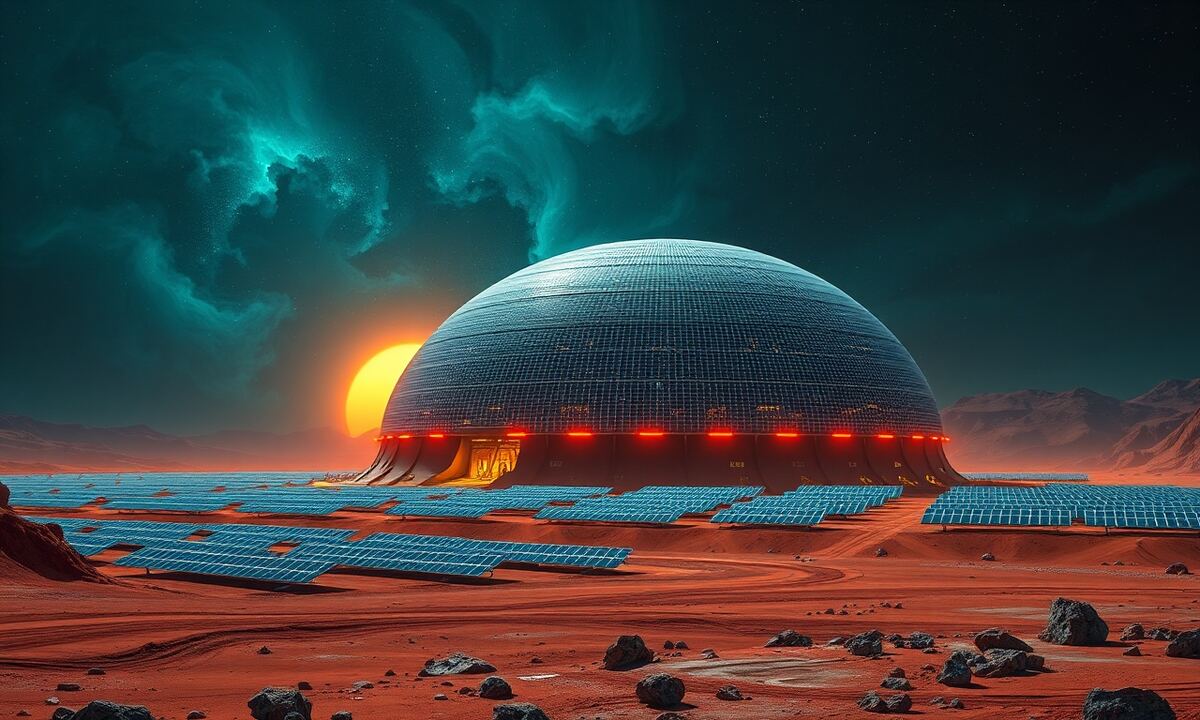
The Solar Plant is the backbone of every planet's energy budget for the first half of its lifespan. Its output formula scales with the level and a planet-specific solar factor — planets in the inner slots of a solar system with high solar scores generate slightly more, but the building itself does not move, so that bonus is locked in at colonisation.
The core advantage of the Solar Plant is its zero ongoing cost. Once built, it produces indefinitely without consuming any resource. In a game where deuterium is perpetually scarce — needed for research, fleet fuel, and eventually the Fusion Reactor — having a free energy source is not merely convenient, it is structurally important to your economy.
The downside is pure build cost and time. The metal and crystal requirements per level grow exponentially. Around level 20 to 23, a single Solar Plant upgrade costs more than most players invest in an entire satellite fleet. At that point the cost-per-energy-unit of the Solar Plant has degraded enough that alternatives become competitive.
Practical rule: always keep your Solar Plant active and upgrading. Do not stop at level 16 just because satellites are cheaper per unit right now — the satellite fragility tax will catch up with you the moment a raider passes through. Think of the Solar Plant as your guaranteed floor; everything above that floor can be supplemented.
If you are still planning your mine upgrade order, the metal mine guide and crystal mine guide show how mine levels determine your energy demand curve, which tells you exactly how aggressively you need to chase Solar Plant levels.
Solar Satellites: Raw Output vs Fragility Tax

Solar Satellites are the most capital-efficient energy source available per crystal spent — provided they are never destroyed. That conditional is the entire problem.
Each satellite costs 2,000 crystal and 500 deuterium to construct (standard OGame values). Their per-unit energy output depends on the solar system's position formula: output = (solar system energy factor × satellite base) ÷ 4, rounded down. In the most favourable inner positions this yields somewhere around 26–28 energy per satellite at peak. In outer galaxy positions it can drop to 20 or below. This variability means the cost-per-energy of a satellite fleet varies meaningfully by planet location.
The mathematics of satellite energy look compelling in isolation:
- At 26 energy per satellite, bridging a 2,600-energy gap costs 100 satellites = 200,000 crystal + 50,000 deuterium.
- A Solar Plant upgrade from level 20 to 21 costs roughly 140,000 metal + 57,000 crystal with comparable energy gain — and those resources are gone permanently.
So in raw cost terms, satellites are often cheaper to deploy than a building upgrade. The catch is they sit in orbit doing nothing to defend themselves. Any player with a basic fleet — even light fighters — can wipe a satellite swarm in a single wave and zero out your energy supply instantly, crashing every mine to single-digit production until you rebuild. On a speed server with active PvP, a satellite-heavy planet in a contested system is a beacon for free hits.
Satellites work best in three specific situations:
- Protected moon or rear-galaxy positions — where your fleet can fleetsave aggressively and attackers rarely probe.
- Short-term energy bridging — you need 500 extra energy for 48 hours while a Solar Plant upgrade completes; satellites are faster to build than waiting on the timer.
- Harvester/collector class planets — if you are running the Collector commander class, your energy production from solar sources gains a bonus, making satellites proportionally stronger for you specifically.
Never rely on satellites as your primary energy source on a main combat planet. The fragility tax is not theoretical — it will happen.
Fusion Reactor: Deuterium for Power
The Fusion Reactor is the end-game answer to energy on planets where satellite fragility is unacceptable and Solar Plant upgrades are prohibitively expensive. It is also the most misused building in OGame — many players rush it too early and throttle their deuterium income at the worst possible moment.
The Fusion Reactor costs a significant amount of metal, crystal, and deuterium to construct, and each level requires a higher Energy Technology research level as a prerequisite. More importantly, once operational it consumes deuterium continuously at a rate that scales with both its level and the current deuterium consumption factor set by the server (which can be adjusted in universe settings). The energy it outputs per level is higher than a comparable Solar Plant level, which is why it eventually pulls ahead — but the running cost is non-trivial.
The key question is: how much deuterium does your Fusion Reactor consume versus how much your Deuterium Synthesizer produces? If the reactor eats more than 30–40% of your synthesiser output, you are crimping your fleet launch capacity and research speed. The deuterium synthesizer guide covers the production formula in detail; use it to calculate your break-even before you commit reactor levels.
Fusion Reactors shine on:
- High-activity main worlds — where destroying satellites is trivially easy for any attacker and the reactor's permanence is essential.
- Planets with high deuterium production — ideally position 6–8 in a system where the synthesiser has strong output and can sustain the reactor drain comfortably.
- Late-game accounts — once your mines are pushing level 30+ and energy demand runs into the tens of thousands, only the Fusion Reactor scales to keep pace.
One commonly overlooked point: Energy Technology research buffs Fusion Reactor output by 2% per level. This means investing in Energy Technology is not just a prerequisite for the reactor — it actively reduces the number of reactor levels you need, which in turn reduces deuterium consumption. Research first, then build levels.
Break-Even Comparisons by Game Phase
Let us put concrete phase labels on when each source dominates, using the mine levels as a proxy for game age. These numbers assume a mid-inner solar system position (around solar system 4–5 of galaxy 1–4) for satellite output.
| Phase | Mine Levels (approx.) | Best Primary Source | Supplemental | Avoid |
|---|---|---|---|---|
| Early (days 1–3 on speed) | Metal 10–15, Crystal 8–12 | Solar Plant (levels 10–17) | Small satellite buffer (20–40) | Fusion Reactor (too early, deut starved) |
| Mid (days 4–14 on speed) | Metal 18–24, Crystal 15–20 | Solar Plant + satellites | First Fusion levels if deut comfortable | Satellite-only strategy |
| Late (weeks 2+) | Metal 25–30+, Crystal 22–28+ | Fusion Reactor primary | Solar Plant maxed, satellites on safe planets | Relying on satellites on contested planets |
On OGames' Proxima universe (economy 200x), this entire arc can complete in a single weekend of focused play. A player who misreads the fusion break-even on Proxima and over-builds satellites on their main world can have their energy supply annihilated in the first major PvP wave — and rebuilding 200 satellites takes real crystal that was earmarked for mine upgrades.
On Andromeda (economy 50x) the same arc plays out over roughly a week, giving more room to adapt. But the principle is identical: identify your current phase, build accordingly, and have a clear trigger for when to transition to the next strategy.
Recommended Energy Mixes by Universe and Role
Rather than fixed ratios, think in terms of threat level and deuterium surplus:
The Conservative Mix (low threat, deuterium tight)
Solar Plant as high as you can afford, satellites capped at 30–50 units for bridging, Fusion Reactor held until Energy Technology level 8+ and deuterium production comfortably exceeds 20,000/hour. This is the right mix for a player who is offline most of the day and cannot fleetsave satellites reliably.
The Aggressive Satellite Stack (inner galaxy, active player)
Solar Plant to level 18–20, then pause building and spam satellites to cover the remaining energy gap. Fleetsave your entire fleet including the satellite swarm every offline period. Reinvest crystal savings from skipping plant upgrades into additional mines. Works extremely well in OGames' Nebula (55% ship debris field) because even if you lose satellites in an attack, you can sometimes recover the crystal through debris harvesting — though that assumes you have recyclers in position, which you should.
The Fusion-Forward Strategy (main world, late game)
Solar Plant to level 20–22, then transition budget to Fusion Reactor. Keep Energy Technology upgrading in parallel. Accept the deuterium drain and compensate by running your deuterium synthesiser at maximum (not throttled by energy — which is self-referential, so ensure the reactor covers synthesiser cost before anything else). No reliance on satellites on this planet. This is the only viable long-term strategy for a high-activity main world on any universe.
If you are building up your infrastructure alongside these energy decisions, the storage buildings guide covers how to prevent resource overflow during the construction windows between energy upgrades — a common silent drain that compounds energy-planning mistakes.
Practical Tips That Veterans Rarely Document
- Build your Solar Plant first each session. Energy is the multiplier on everything else. One missed Solar Plant level costs you proportionally more than one missed mine level when the throttle kicks in.
- Check your production screen, not just the mine level. The production screen shows you actual output after energy throttling. Many players have Metal Mine level 22 and think they are producing at full capacity when energy is cutting them to 70%.
- Deuterium Synthesizer placement matters for Fusion. Your Deuterium Synthesizer on a planet intended for a Fusion Reactor should be in position 6–8 of a mid-inner solar system. The output bonus from position is multiplicative with universe speed — on Proxima at 200x this is massive.
- Satellites on a moon do not exist. Moons cannot build satellites. All satellite discussion applies to planets only.
- The Collector class boosts solar production. If you play Collector on OGames, both your Solar Plant and satellite output receives a percentage bonus. This tips the solar/satellite mix further toward non-fusion solutions earlier than it would for other classes.
- Never build Fusion Reactor above your Energy Technology level allows. Beyond the hard prerequisite, each Energy Technology level unlocks a fusion efficiency bonus. Rushing reactor levels ahead of your research wastes build cost — you get fewer energy units per deuterium burned.
FAQ
Can I skip the Solar Plant entirely and just use satellites?
Technically possible in the very early game, but not recommended on any active universe. Satellites can be wiped in a single attack, leaving your entire planet at near-zero production. The Solar Plant is a permanent, indestructible baseline. Always maintain it as your foundation and use satellites only to supplement above that floor.
At what level should I start building a Fusion Reactor?
The practical trigger is when two conditions are both true: your Energy Technology is level 8 or higher, and your deuterium synthesiser produces enough that the reactor's consumption takes no more than 25–30% of hourly output. On most accounts this happens when the synthesiser is around level 20–22. Rushing the reactor before those conditions are met starves your fleet and research simultaneously.
Do solar satellites produce different amounts in different galaxy positions?
Yes. The solar output factor varies by solar system number and galaxy number, with inner positions (lower system numbers) generally producing more energy per satellite than outer positions. If your colony is in system 400 of galaxy 6, expect noticeably fewer energy units per satellite than a colony in system 50 of galaxy 2. Check your production screen's satellite output estimate before committing to a large satellite build on a peripheral colony.
Is the Fusion Reactor worth the deuterium cost on speed servers like OGames?
On speed servers the deuterium drain is amplified by the economy multiplier, but so is your synthesiser output. In practice, Fusion Reactors are very much viable on OGames — especially in Proxima at 200x where both your synthesiser output and your reactor consumption scale up by the same factor. The relative economics stay similar to 1x; what changes is how quickly you arrive at late-game infrastructure. Active players on Proxima can be running Fusion Reactors within their first 48 hours if they prioritise correctly.
Should I demolish satellites before a fleetsave to avoid losing them?
No — you cannot demolish satellites, only the buildings that make them. The correct strategy is to fleetsave the satellites as part of your fleet (select them in the fleet dispatch screen and send them on a long expedition, deployment, or holding mission). A common mistake is forgetting to include satellites in the fleetsave selection, leaving them orbiting your undefended planet overnight. Always double-check your fleet composition before confirming the save.
Ready to put these strategies to work on a server where economy speeds actually let you test them quickly? Register on OGames and choose the universe that matches your playstyle — whether that is the measured pace of Andromeda or the full-throttle grind of Proxima, your energy decisions will matter from the very first hour.