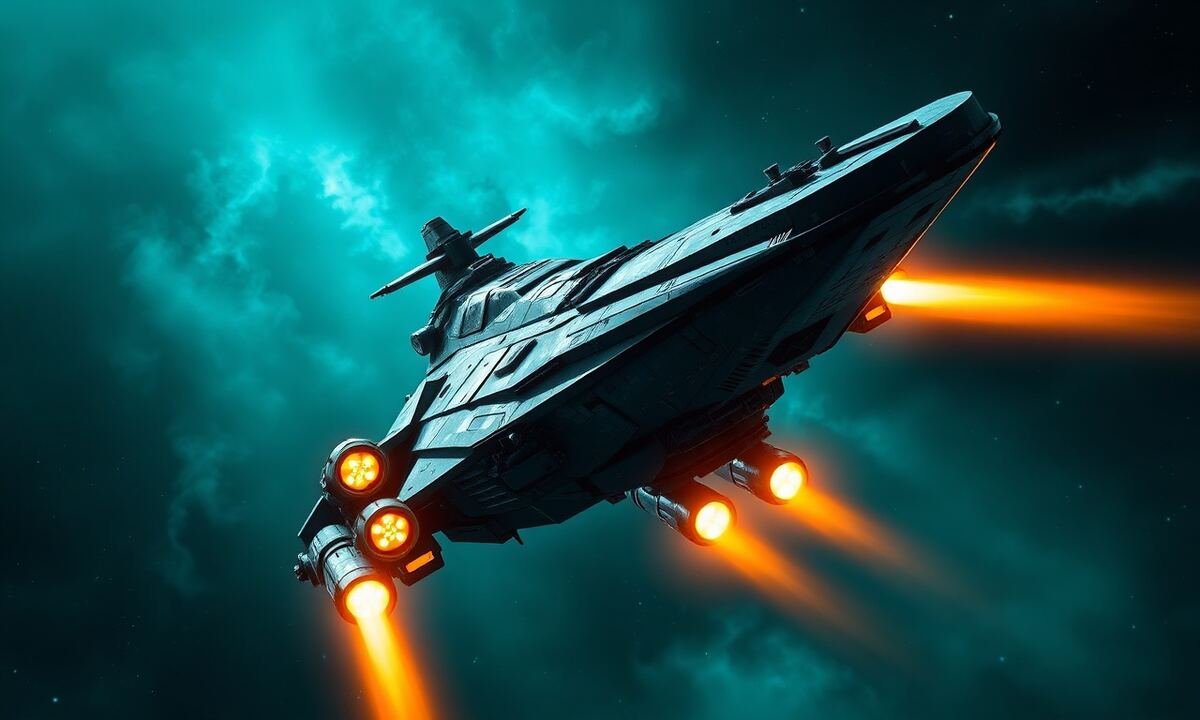
The cruiser is the ship that separates OGame players who raid from players who farm. Fast enough to hit before defenders can react, bristling with rapid fire against the galaxy's most common defensive unit, and tough enough to absorb a counterattack — the cruiser earns its place as the mid-game backbone for almost every aggressive playstyle. If you are past the light fighter phase and wondering what comes next, the answer is almost always a cruiser fleet.
The Cruiser Identity

To understand why the cruiser works so well, you need to look at its stat block holistically rather than cherry-picking individual numbers. The cruiser sits at 27,000 structure points, carries a base shield of 50, and delivers 400 units of weapon damage — all while hitting a base speed of 15,000 (before drive research). Compare that to a heavy fighter at 10,000 structure and 150 damage, or a battleship at 60,000 structure but only 12,000 base speed, and the cruiser's niche snaps into focus: it is the fastest ship in its damage tier.
The cruiser's cost — 20,000 metal, 7,000 crystal, 2,000 deuterium — is real. You are paying roughly four times the metal cost of a light fighter per hull. But the math changes the moment you factor in what the cruiser does per unit of resources spent against the targets it was designed to eliminate. Against light fighters, the cruiser does not just win — it wins cheaply, quickly, and repeatedly, thanks to one of the most impactful mechanics in the entire game: rapid fire.
Rapid fire means a unit gets multiple weapon rolls against a specific target type in a single combat round, with each additional shot firing at a fixed probability. The cruiser's rapid fire rating of 6 against light fighters means it fires, on average, six shots per round against each LF it faces. Against rocket launchers — the bread-and-butter of cheap planetary defense — it also carries rapid fire of 10. These two values make the cruiser the premium anti-spam weapon in OGame's arsenal.
Rapid Fire vs Light Fighters: The Math That Matters

New players often assume that more ships equal more firepower in a linear sense. OGame's rapid fire system breaks that assumption entirely. When a cruiser fires against a light fighter with rapid fire 6, the expected number of shots in a single round is: 1 + (5/6) + (5/6)² + … converging to 6. Each of those shots deals 400 damage against a light fighter with just 400 structure and a 10-point shield. One cruiser, in theory, can solo a stack of several light fighters in a single round.
In practice, combat rounds involve shields resetting, simultaneous fire from all units, and the 70% damage threshold for ship destruction, but the underlying advantage is enormous. A fleet of 100 cruisers engaging 600 light fighters is not a fair fight — it is a slaughter. The cruiser fleet exits with minimal losses while destroying resources worth multiples of its own fuel cost. This is why veterans on speed servers rush cruisers the moment their economy can support the deuterium bill.
The flip side: cruisers are vulnerable to ships that carry rapid fire against them. The battleship has rapid fire 3 against cruisers. The battlecruiser — arguably the cruiser's evolutionary successor — has rapid fire 33 against cruisers, which is one of the most lopsided matchups in the game. Understanding who holds the rapid fire advantage at every tier is the foundation of good fleet composition, and it starts here, with the cruiser as your reference point. You can find a detailed breakdown of that next evolution in our battlecruiser guide.
Against defenses, the cruiser's rapid fire 10 vs. rocket launchers is almost as impactful as its anti-LF capability. Planets defended primarily by rocket launchers — common early- and mid-game — fold quickly under a cruiser assault. If a target has mixed defenses with heavy guns (ion cannons, plasma turrets), the calculus changes, but for the typical mid-game farm, cruisers chew through defenses efficiently enough that losses stay predictable and profitable.
Speed Raiding with Cruisers

Speed is the cruiser's second great gift. At 15,000 base speed with Impulse Drive, and scaling upward with each drive level, cruisers reach targets faster than any comparably armed ship. On fast OGame servers like those on OGames, where universe speed multipliers compress travel times dramatically, the cruiser's speed advantage translates into the ability to hit multiple targets per hour during an active session — a multiplicative income multiplier compared to slower fleets.
The classic speed raiding setup pairs cruisers with a small cargo escort. Large cargos travel at 7,500 base speed; small cargos at 10,000. Neither matches the cruiser, so if you send cargos at cruiser speed, you are simply slowing your fleet. The veteran solution: send the cruiser strike force first on a pure attack mission, destroy defenses and any ships on the planet, then follow with a second fleet of cargos 30–60 seconds behind. The cargos arrive to an empty, undefended planet and collect everything in the debris field plus whatever resources the planet holds.
On OGames, the debris field mechanic is particularly generous. In Andromeda, 43% of destroyed ships return as metal/crystal debris and 17% of destroyed defenses. In Nebula, those figures jump to 55%/22%. In Proxima, you are looking at 80%/32%. This means your cruiser raids are not just about the planet's resource storage — they are about manufacturing profitable debris fields out of the defending fleet itself. Bring recyclers as your third wave and the raid pays dividends on top of dividends.
Moon operations multiply the cruiser's speed advantage further. Launching from a moon eliminates the detection window of a phalanx scan, since moon fleets cannot be phalanxed in transit. If you combine a moon base with cruiser speed, you become nearly invisible until the moment of impact — a combination that drives many mid-game players to prioritize moon building alongside their cruiser production queue.
Cruiser Fleet Ratios and Composition
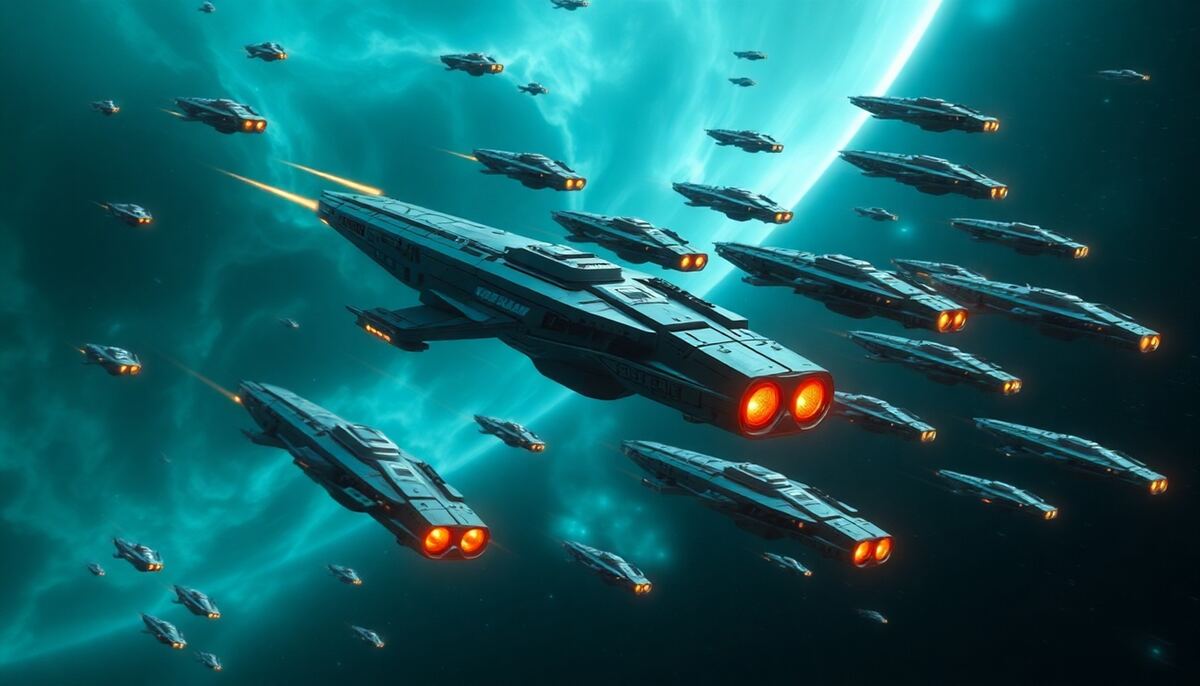
Running pure cruisers is tempting when you first unlock them, but a healthy raiding doctrine involves some supporting tonnage. Here is how experienced players typically structure their cruiser fleets at different stages of the mid-game:
- Early cruiser phase (50–200 cruisers): Pair with large cargos in a 1:1 to 1:2 ratio (one large cargo per one or two cruisers). The cargo capacity plugs the gap while your cruiser count grows. Prioritize Impulse Drive research aggressively — every level is a direct time-to-target reduction.
- Mid cruiser phase (200–500 cruisers): Transition to a two-wave system. Strike fleet travels fast, cargo fleet follows. Keep a dedicated recycler squad (20–40 recyclers) on standby for opportunistic debris collection. If you are in Nebula or Proxima, recycling becomes mandatory, not optional, given the debris rates.
- Established cruiser doctrine (500+ cruisers): At this scale, you begin mixing in heavies. A small battleship contingent (10–20% of fleet value) plugs holes against targets with heavy cannon defenses that cruisers cannot quickly chew through. The cruisers handle the LF spam and rocket launchers; battleships crack hard targets. Review our battleship guide for when and how to make that transition.
One common mistake is under-investing in Impulse Drive. Each drive level increases cruiser speed by 20%, compounding dramatically over the first ten levels. A player with Impulse Drive 12 hits targets in roughly half the time of a player with Impulse Drive 6. On active raiding sessions, this difference can double your raids per hour. Schedule Impulse Drive research concurrently with cruiser production whenever possible — the two scale together.
Deuterium consumption is the cruiser's real cost in the mid-game. At high drive levels and long travel distances, a 300-cruiser fleet can burn thousands of deuterium per round trip. Optimize your target list to minimize travel time, prioritize nearby systems, and keep your deuterium synthesizer production ahead of your fleet's appetite. This is one area where the academy's commander bonuses — particularly the Geologist and Admiral — meaningfully reduce the friction of running a large cruiser fleet.
Counters to Cruisers
Every ship has a natural predator, and the cruiser has several. Knowing them is not pessimism — it is the foundation of good fleet-saving discipline and defensive awareness.
- Battlecruisers: Rapid fire 33 against cruisers. This is not a counter — this is annihilation. A relatively small battlecruiser force can eliminate a much larger cruiser fleet at minimal losses. If you see a player building battlecruisers in your galaxy, your cruiser doctrine needs either to escalate toward battlecruisers yourself or to shift toward fleet-saving rigor. The battlecruiser guide covers this transition in depth.
- Battleships: Rapid fire 3 against cruisers. Less severe than the battlecruiser, but at large scales the cumulative effect is significant. A well-built battleship fleet can grind through cruisers profitably. Battleships also massively outgun cruisers in raw firepower per hull, meaning pure DPS races favor battleships at comparable resource investment.
- Destroyers: Rapid fire 2 against cruisers, plus exceptional raw damage output. A destroyer costs more but delivers more structure and more weapons than a cruiser, and the rapid fire tilts every engagement in the destroyer's favor. At the stage where opponents field destroyers, pure cruiser doctrine is obsolete — you need battlecruisers or your own destroyers as the backbone.
- Plasma turrets: Defenses do not have rapid fire against cruisers, but plasma turrets deal 300 base damage with a 300-point shield and enormous structure. A planet stacked with plasmas will chew through cruiser waves faster than rocket launchers will. Always spy before sending cruisers to an unknown target — the difference between "rocket launcher farm" and "plasma farm" determines whether your raid is profitable.
The cruiser's speed is also a defensive liability. Faster fleets are more fuel-expensive and less tanky per unit of metal spent. A player who builds a cruiser doctrine without practicing rigorous fleet saves is providing an expensive target for any battlecruiser user in the neighborhood. Fleet save is non-negotiable at cruiser scale — park your fleet in harvest or deploy to a safe coordinate every time you log off.
Cruisers into Late Game
The classic narrative is that cruisers become obsolete in the late game. The truth is more nuanced: cruisers become obsolete as primary combat units, but they retain niche roles that experienced players exploit indefinitely.
The most common late-game cruiser role is harassment raiding against players who, for whatever reason, maintain light fighter or rocket launcher defenses. Even when your main fleet has graduated to battlecruisers and destroyers, a dedicated cruiser wing for farming mid-tier targets keeps your economy churning without burning expensive battlecruiser fuel on low-value hits.
Cruisers also serve as expedition fodder. Expeditions send fleets into the unknown for resource windfalls, but they also carry risk — alien attacks and fleet losses are possible. Sending a mixed cruiser/large cargo expedition fleet puts meaningful combat power in the expedition without risking your irreplaceable battlecruisers or destroyers. The rapid fire vs. light fighters that makes cruisers excellent raiders also makes them solid expedition combat units against the lighter alien compositions you encounter most often. Check our cargo ships guide for how to balance cargo capacity against combat power in expedition fleets.
In the very late game, some players maintain a "wall of cruisers" as a deterrent — a numbers game designed to make attacking them unprofitable even for battlecruiser fleets, by ensuring the rapid fire math never quite works out cleanly for the attacker. This is more common in slower universes where building hundreds of battlecruisers takes weeks; on speed servers like OGames, the tech race accelerates and this strategy has a shorter window before opponents outscale it.
The transition from cruiser backbone to battlecruiser backbone is the pivotal moment in OGame's mid-to-late-game arc. If you are approaching that inflection point, understanding both the battlecruiser's capabilities and the destroyer/bomber combo for hardened defenses will help you plan your research and shipyard queues efficiently. The fundamentals you learn running a cruiser doctrine — two-wave raids, debris recycling, drive research priority, fleet saves — transfer directly and form the muscle memory of a competent late-game player.
On OGames speed servers, that transition happens faster than on any official server. In Proxima at 200x economy speed, a player can go from first cruiser to first battlecruiser in days of active play rather than months. This compression is exactly what makes speed OGame servers compelling — you experience the full arc of fleet evolution in a condensed timeline, with each decision carrying more immediate consequence.
FAQ
When should I start building cruisers?
Build your first cruisers as soon as you have Shipyard level 5, Computer Technology level 1, Impulse Drive level 4, and Ion Technology level 2 — the prerequisites for unlocking the hull. Practically speaking, you want at least 50–100 cruisers before they become your primary raiding tool, which means having an economy that can sustain the metal and deuterium cost. On OGames speed universes, this typically happens within the first few days of active play in Nebula or Proxima, and within the first one to two weeks in Andromeda.
How many cruisers do I need to farm profitably?
The floor for consistent profitability is roughly 50–80 cruisers against light fighter/rocket launcher targets. Below that number, your losses against even modest defenses can eat your margin. At 150–200 cruisers you develop enough firepower to hit a wide range of mid-game targets reliably. The ceiling is whatever your deuterium production can sustain per raid cycle — there is no such thing as too many cruisers until you are genuinely bottlenecked by fuel costs.
Do cruisers work in Alliances Combat System (ACS) attacks?
Yes, and cruisers are often the preferred ACS assault ship for combined attacks on lightly defended planets or players who primarily use light fighters and rocket launchers. In ACS, the rapid fire advantage stacks across the combined fleet, making cruiser-heavy coalitions devastatingly efficient against spam defenses. However, if the target has a battlecruiser-based defense fleet, you want your ACS allies to bring the heavier hulls instead of relying on cruisers to absorb rapid fire from battlecruisers.
Should I prioritize weapon, shield, or armor upgrades for cruisers?
Weapon upgrades give the highest return on investment for raiding cruisers. Each weapon level adds 10% base damage, which multiplies through the rapid fire mechanic — more damage per shot times more shots equals significantly higher kill efficiency. Shield upgrades matter for fleet survival when you expect counterattacks; armor upgrades reduce individual losses in tough fights. The typical veteran priority is weapons first, then alternating armor and shields once weapons are ahead by three or four levels.
What is the best universe for a cruiser-focused playstyle on OGames?
Andromeda suits players who want a measured mid-game where cruiser doctrine can mature over weeks before the transition pressure from battlecruisers becomes intense. At 50x economy and 50x fleet speed, the game moves fast enough to be engaging without blurring past the cruiser phase entirely. Nebula at 99x accelerates the raiding loop significantly and rewards the two-wave cruiser-plus-recycler approach because of its 55% ship debris rate. Proxima at 200x is the all-in speed experience — you will graduate from cruisers to battlecruisers quickly, but the resource returns per raid are enormous. Register on OGames and pick the universe that matches how many hours per day you want to invest.
The cruiser is not a stepping stone to be rushed past — it is the phase where OGame's strategic depth truly opens up. Master the rapid fire relationships, dial in your raid timing, and build the fleet-saving discipline that protects your investment. Whether you are just unlocking your first shipyard in Andromeda or pushing aggressive expansion in Proxima, a well-run cruiser doctrine is the engine that funds everything that comes next. Create your free account on OGames and put these tactics to work in one of three active speed universes launching daily raids right now.