
In OGame, a blind attack is a gamble; an informed attack is a decision. Espionage technology lets you peek inside an enemy's planet before committing your fleet — seeing their resources, ships, defenses, buildings, and research all from a small probe that costs almost nothing to build. If you are brand new and wondering why veterans seem to always hit the right targets and walk away clean, this guide is the answer. We will cover how to get your espionage chain working, how to interpret every line of a spy report, how counter-espionage works, and exactly what to look for when deciding whether a target is worth the fuel.
Why Intelligence Wins Wars in OGame

Every veteran raider will tell you the same thing: resources you raid are great, but resources you avoid losing are better. Before espionage existed in strategy games of this type, attackers had to either get lucky, get tipped off by alliance mates, or simply crash their fleet into unknown defenses and hope for the best. Espionage changes the entire economics of the game.
Consider what you need to know before sending a fleet of Battleships across three galaxies:
- Are there enough resources to justify the deuterium cost? Long-range attacks burn significant fuel. If a planet only holds a trickle of metal, the raid is unprofitable before a single ship fires.
- What defenses are waiting? A Plasma Turret or a Heavy Laser battery can shred light attacking fleets. Rocket Launchers are cheap for defenders to mass-build and punishing to walk into blindly.
- Are ships present? A seemingly inactive player could have a fleet of Cruisers sitting on the planet waiting to defend. That ambush can flip a profitable raid into a total loss.
- Is the planet active? If the owner logs in regularly, they will likely fleet save before you arrive. Good spies help you time your attacks around genuine inactivity windows.
Every solid attack in OGame — whether you are hunting inactive farms, staging a coordinated alliance strike, or retaliating against a raider — starts with fresh, accurate spy data. Build espionage early, build it often, and treat those probe reports as mandatory homework before every launch.
On speed universes like those at OGames.net, where economy speeds are 50x to 200x, players accumulate resources and grow fleets at a pace that makes intel even more valuable. A target that looks harmless on Monday might have a full Battlecruiser wing by Wednesday.
Building and Sending Your First Probes

Espionage Probes are among the cheapest ships in the game — 0 metal, 1,000 crystal, 0 deuterium each in their base costs — which means you should be building them in large stacks as early as possible. Before you can build them, you need the research and the facility chain in place.
The prerequisite chain
- Research Lab level 3 — needed before you can unlock Espionage Technology.
- Espionage Technology level 2 — unlocks Espionage Probe construction at the Shipyard. Higher levels show you more information in each spy report.
- Shipyard level 2 — required to build Espionage Probes.
On a speed server like Andromeda (100x research speed), this chain is achievable within hours of starting. Prioritize it in your first week build order because you will be flying blind for every moment you do not have probes available.
How many probes to send
This is where beginners consistently make mistakes. Sending one probe at a low Espionage Technology level is nearly useless — you will see only a partial picture and risk losing the probe to counter-espionage. Use this rule of thumb:
- 1–2 probes — may only reveal resources; defense and fleet data hidden.
- 3–5 probes — usually shows resources plus fleet information at moderate Espionage Tech levels.
- 5–8 probes — typically reveals buildings and basic research at higher tech levels.
- 10+ probes — for full research detail on a well-researched, high-tech opponent.
The exact formula depends on both your Espionage Technology level and the target's Espionage Technology level. More precisely: the number of data categories visible scales with the difference between your tech and theirs. If your target has high Espionage Technology, you need to send significantly more probes to compensate. Veterans routinely send stacks of 20–30 probes against serious opponents just to guarantee a complete picture.
To send probes, open Galaxy view, click on a planet to expand the row, click the blue espionage icon (spy glass symbol), and choose how many probes to send. The probes travel at their top speed — Espionage Probes are some of the fastest ships in the game — and the report arrives in your message inbox the moment they return.
Anatomy of a Spy Report
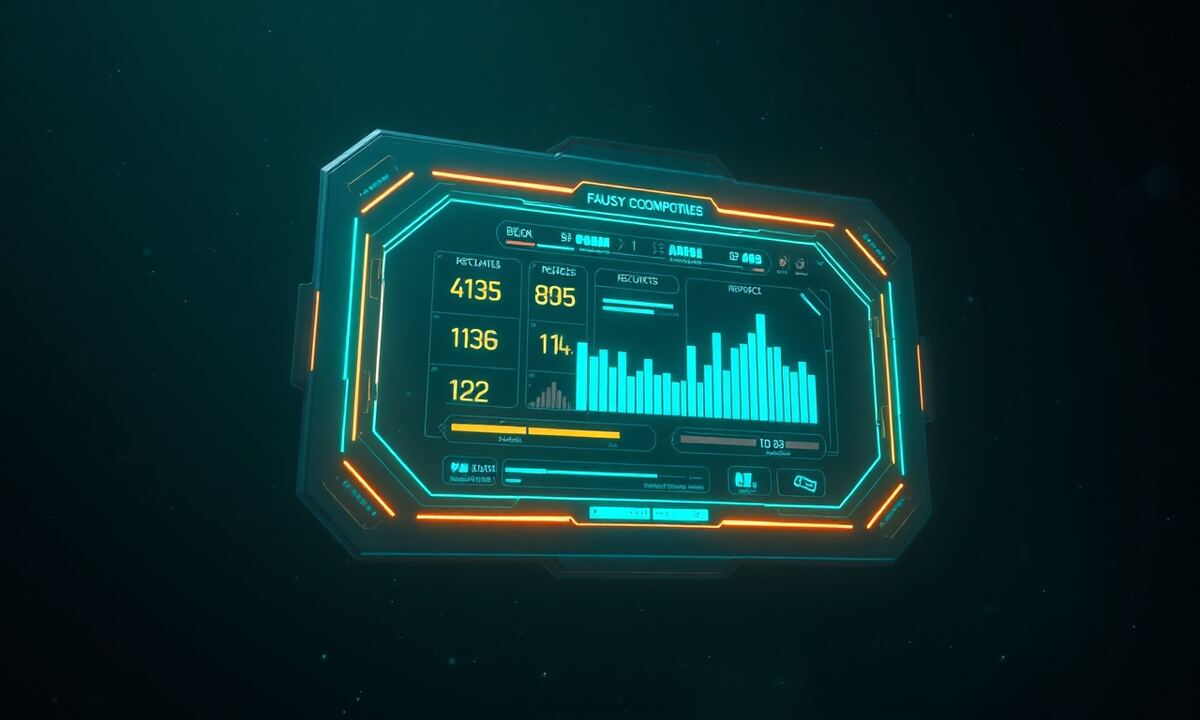
The spy report is a structured document. Learning to read it quickly is a skill that separates casual players from effective raiders. Here is what each section tells you.
Resources
Always the first block shown, regardless of probe count or tech level. You will see current Metal, Crystal, and Deuterium on the planet (and moon if applicable). This is the most important number for raid profitability. Compare the total resource value against your expected deuterium fuel cost for the mission — if the ratio is at least 3:1 in your favor, the raid is generally worth considering. Remember that resources sitting on a planet will partially fill into storage buildings, so a player with high-level Metal Storages can hold enormous quantities that would tempt any raider.
Fleet
The second block, visible once you have enough probes. This lists every ship type present on the planet with its count. Pay close attention here:
- Defending fleets make raids dangerous. If you see Battleships, Battlecruisers, or Destroyers, weigh them carefully against your own attacking force before committing.
- Small Cargos and Large Cargos are a good sign — they suggest the player is a miner who uses cargo ships for transport rather than a combat specialist.
- Recyclers indicate the player farms debris fields; it does not affect your raid outcome but tells you about their playstyle.
- An empty fleet section means either the player has no ships (beginner or miner) or, more dangerously, their fleet is away on a mission and could return while you are in flight.
Defenses
Defense structures do not retreat — they fight until destroyed or until your fleet is gone. Even a moderate stack of Rocket Launchers can inflict meaningful losses on a Light Fighter swarm. Plasma Turrets can kill entire wings of medium ships. Before finalizing your attack, understand the defense types you will encounter and run a battle simulation to check your expected losses and loot.
Buildings
Visible at higher probe counts. Building levels tell you the player's economic stage. High-level Metal Mines, Crystal Mines, and Deuterium Synthesizers mean steady resource production — and likely regular surpluses worth raiding repeatedly. A high-level Shipyard tells you this player can rebuild their fleet fast; do not underestimate them.
Research
The deepest layer, requiring the most probes. Research levels reveal combat modifiers — high Weapons, Shielding, and Armour Technology mean their ships (and defenses) hit harder and survive longer than the base stats suggest. A player with level 15 Weapons Technology does roughly double the damage compared to an unresearched opponent. This context is critical for accurate battle simulation.
Counter-Espionage: When Probes Get Caught

Every spy mission carries a risk: the target might detect and destroy your probes before they escape. This is called counter-espionage, and understanding the mechanic prevents a common beginner mistake — assuming probes are invisible.
The counter-espionage formula
Counter-espionage chance scales with the difference in Espionage Technology levels between you and the target, and with the number of probes you send. In broad terms:
- If your Espionage Technology is higher than the defender's, your probes have a lower chance of being caught — in some cases near zero.
- If their Espionage Technology is higher than yours, every probe you send has an increasingly significant chance of being destroyed.
- Sending more probes increases counter-espionage chance because more signatures appear in their detection net.
This creates a trade-off: to get a full intel picture you need more probes, but more probes raise your chance of detection. The solution is to keep your Espionage Technology as high as possible. Against a player whose tech you do not know, a mid-range send (5–8 probes) is a reasonable balance between information and detection risk at early-to-mid tech levels.
What happens when probes are caught
The defender receives a message telling them exactly who spied on them, from which planet the probes launched, and how many were sent. Your probes are destroyed — you lose the crystal investment. More importantly, you have just flagged your interest to the target. A savvy opponent will immediately fleet-save and possibly set a return trap. If you plan to follow an espionage with an actual attack, move fast — ideally calculate your fleet travel time to arrive shortly after your probe report comes back so the target has minimal warning window.
The safety principle
Always invest in Espionage Technology research before probing strong players. At tech parity or above, probes are nearly undetectable. Below parity, you are gambling crystal on every spy mission. For new players still building their research chain, prioritize getting your first real ships and Espionage Technology in parallel so you arrive at your first raids with a clean intel advantage.
Evaluating a Target from the Report
You have a fresh spy report open. How do you decide whether to attack? Here is the decision framework veterans use instinctively after months of play.
Step 1 — Profitability check
Calculate your deuterium cost for the round trip (including potential recall) and compare it to the resources visible on the target planet. A general rule: aim for at least three times the fuel cost in loot. On fast universes where deuterium is plentiful, the threshold can flex, but raiding for a net loss in resources is a habit that compounds into real strategic weakness over time. Check the resource value guide if you are unsure how to compare metal, crystal, and deuterium values.
Step 2 — Combat simulation
OGames includes a built-in Battle Simulator accessible from the menu. Plug in your attacking fleet versus the defending fleet and defenses shown in the report. Check the simulation for:
- Expected ship losses on your side
- Expected resource looted (capped at your fleet's cargo capacity)
- Whether the raid is net positive after ship repair or rebuild costs
Never skip this step when defenses or defending ships are present. Intuition fails here; the simulator does not.
Step 3 — Activity check
In Galaxy view, a colored activity indicator appears next to planets when the owner has been active recently. A target active within the last 15 minutes is likely watching and will fleet-save. Targets with no activity for hours (or days, in the case of genuine inactives) are the safest picks. Cross-reference this against the resource levels in the report — a rich, inactive planet with no ships is the ideal farm scenario.
Step 4 — Fleet cargo capacity
Your attacking fleet can only carry a fixed amount of loot. Small Cargos carry 5,000 units, Large Cargos 25,000, Battleships 1,500. Bring enough cargo ships to collect meaningfully from what the report shows. Arriving at a planet with 500,000 metal and deuterium but only 10 Light Fighters and 2 Small Cargos means leaving most of the loot behind. Adjust your fleet composition before you send.
Step 5 — Repeat spy before commitment
Spy reports have a timestamp. If you are launching a fleet that takes 30 minutes to arrive, the situation on the target planet may have changed significantly since the report was generated. For high-value raids, send a second probe wave a few minutes before launch to verify the target has not pulled resources, deployed defenses, or returned a fleet. Fresh data is the only data you should trust.
When You Get Spied On
Defense is equally important in OGame, and being spied on is your early warning system that someone is planning a raid. When your inbox shows an espionage notification, do not ignore it.
Immediate steps
- Fleet save immediately. Send your ships on a long mission — a deployment to a distant system, a harvesting run, or a colonize mission to a far galaxy. The goal is to ensure your fleet is in flight and unreachable when the attacker arrives.
- Move your resources. Spend what you can on research or buildings. Transport surplus to a moon or a planet the attacker may not have spied. Reducing the juicy loot sitting idle removes the attacker's primary motivation.
- Check who spied you. The message names the attacking player and their home planet. Check their statistics in the rankings. A high-ranked player with many fleet points represents a real threat; a low-ranked beginner who spied you by mistake is probably not organizing an assault.
Raising your Espionage Technology as a defender
High Espionage Technology on your side does two things: it catches more probes directed at you (raising the attacker's counter-espionage chance), and it means you need fewer probes to see full detail when you spy others. Both directions benefit from the same research. As your Espionage Technology climbs above your common opponents, you start winning the information war systematically — you see everything about them while their probes bounce off your detection grid.
The phalanx threat on moons
Once you and your opponents have moons, the game's intelligence layer deepens further. A Sensor Phalanx built on a moon allows its owner to spy on fleet movements in nearby solar systems — not planet resources, but actual fleet missions: destination, arrival time, and fleet composition. This is why serious fleet savers use deuterium-efficient jumps through Jump Gates rather than predictable ballistic flight paths. If you have a moon, building a Phalanx early pays intelligence dividends far beyond what probe spying provides. For a full treatment of the Phalanx mechanic, see the advanced espionage guides in the OGames blog.
Putting It Together: Your Espionage Workflow
By now you have all the pieces. Here is how a polished spy-and-raid sequence looks in practice on a speed universe like Andromeda or Nebula:
- Open Galaxy view and scroll through active solar systems near your planets. Look for planets without moons (no fleet hiding on moons), owned by players ranked below you in fleet points, with no recent activity.
- Send a conservative first probe wave (5–8 probes if your Espionage Tech is level 6+, more if you suspect high tech on their side).
- Read the report. Check resources, fleet, defenses in order. If the resources are thin or a strong fleet is present, archive the report and move on.
- For promising targets, open the Battle Simulator, input your planned attacking fleet versus their defenses and fleet, run the sim, confirm you come out profitably.
- Check fleet cargo capacity. Add enough Large Cargos to your attack to collect the full loot shown.
- Send a second probe wave a few minutes before launch to get a fresh timestamp confirmation.
- Launch your attack fleet, time it to arrive during the target's likely offline window.
- Collect the combat report. Log the target's solar system coordinates and resource production pace. Profitable farms get hit repeatedly on a cycle — this is the foundation of every raider's economy in OGame.
This workflow sounds methodical because it is. Speed universes like Proxima (200x economy) compress the timescales — planets fill with resources quickly, attacks travel faster, and the intelligence advantage of probing multiple targets each session compounds rapidly into a decisive economic lead over players who farm blind.
FAQ
How many Espionage Probes should I build as a beginner?
Build at least 50 probes as soon as your Shipyard and research allow. They are extremely cheap in crystal costs and fast to produce on speed servers. You will burn through probes faster than you expect once you start actively scouting targets — a session of checking a dozen planets before deciding where to raid can consume 100+ probes. Keep a standing stock so you are never rationing your own intelligence.
What if the spy report only shows resources and nothing else?
This means either your Espionage Technology is too low relative to the target's, or you did not send enough probes. Raise Espionage Technology and resend with a larger probe stack. As a rough benchmark: to see fleet data consistently, aim for Espionage Technology level 4–5 and send 5+ probes. To see buildings and research, level 6+ with 10+ probes covers most opponents in the beginner and intermediate range.
Will the target know I attacked them after I spy them?
Spying alone sends them a notification if your probes are detected (counter-espionage). If your probes slip through undetected, they see nothing. Your actual combat attack always generates a combat report that both parties receive — so yes, after a raid they will know they were hit and by whom. The spy mission itself may or may not tip them off depending on tech levels.
Is it worth spying players in my own alliance?
Generally no — spying alliance mates creates unnecessary friction and distrust. Alliance coordination works through internal chats and shared intel, not unilateral probe runs. The exception is if you are verifying a suspicious claim (a fellow member claiming a planet is safe to share coordinates for) or if your server culture explicitly treats internal spying as a game-within-the-game. Check your alliance rules first.
How does espionage work differently on OGames compared to official servers?
The core mechanics are identical — probe build costs, report structure, counter-espionage formulas, and Espionage Technology scaling all work the same way. The difference is speed and resource density. On Andromeda (50x) through Proxima (200x), players tech up through Espionage Technology levels far faster than on a 1x server, which means the average player you spy will have higher tech sooner. This raises the baseline probe count you need to send for complete reports. Start building Espionage Technology aggressively from day one, and you will maintain an intel advantage throughout the early game. You can register a free account on OGames and be running your first spy missions within your first hour of play.
Espionage is not optional in competitive OGame — it is the foundation every successful fleet commander builds on. Invest in your research chain early, learn to read reports quickly, and never send a raid fleet without a current spy report in hand. The players who dominate leaderboards are not the ones with the biggest fleets; they are the ones who know exactly where to send those fleets. Start spying, start learning, and let the intel lead the way.
Ready to put this into practice? Create your free OGames account and pick a universe — Andromeda for a classic paced experience, Nebula for a faster rise, or Proxima if you want maximum speed. Your first probe mission is waiting.