
OGame is a persistent browser-based 4X space strategy game: you mine three resources, research hundreds of technologies, build fleets of warships, colonize planets across nine galaxies, and compete with thousands of other players — all without downloading a single file. If you have just registered on OGames and are staring at your first planet wondering where to begin, this guide covers everything from your first five minutes to your first week of confident play.
What Kind of Game Is OGame?

OGame sits in the 4X genre — eXplore, eXpand, eXploit, eXterminate — but it runs entirely inside a browser and never pauses. While you sleep, your mines keep producing, your research keeps ticking, and your enemies keep moving. That always-on quality is what makes the game both compelling and merciless for new players who misunderstand it.
The game is primarily a real-time resource management and fleet warfare title. Combat is resolved instantly when two fleets meet at a target, but the logistics — scouting, travel time, arrival timing, defense placement — are where skill lives. Unlike many strategy games, OGame rewards patience, planning, and information gathering far more than raw spending or online hours.
OGames runs three universes launched in April 2026, each tuned to a different playstyle. Andromeda runs at 50x economy speed for players who enjoy a measured progression. Nebula pushes 99x for faster action. Proxima runs at 200x, delivering a breakneck pace where empires rise and collapse in days. All three support up to 5,000 players across 9 galaxies. If you are unsure which to pick, read our universe comparison guide before registering.
One thing that sets OGame apart from many browser games: it is not pay-to-win here. Dark Matter — the premium currency — is handed out generously at signup and weekly, so free players compete on equal footing. More on that below.
The Core Loop: Mine, Build, Research, Expand
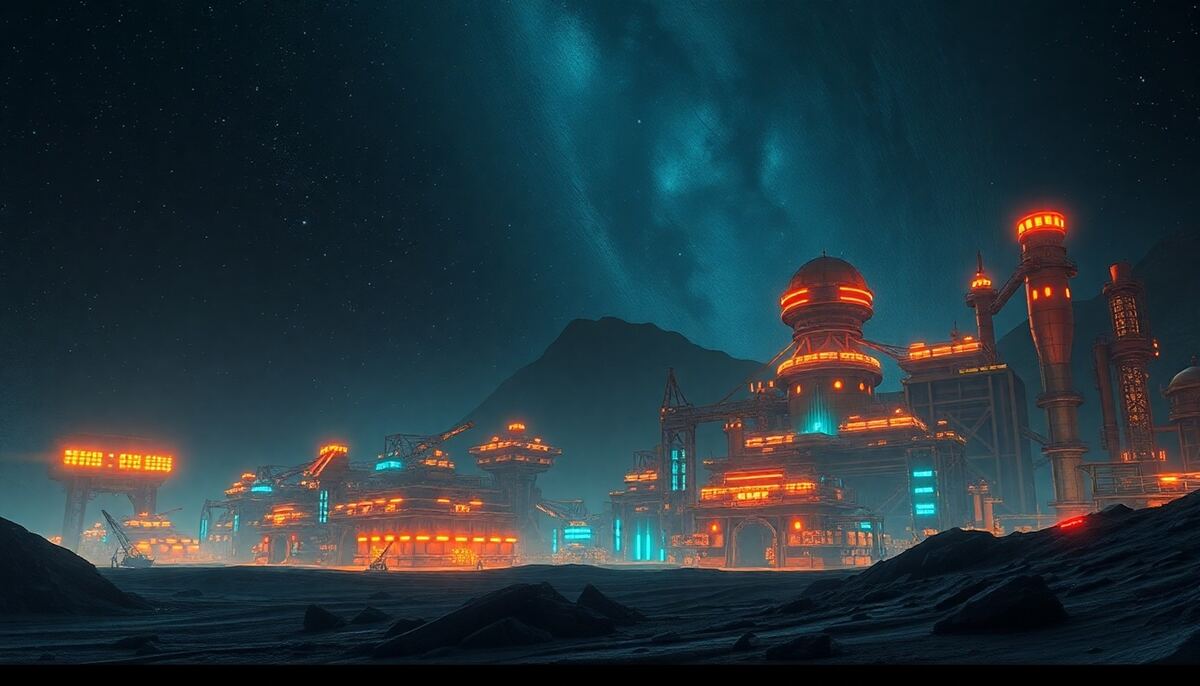
Before touching anything else, internalize this cycle — it never stops, and every decision feeds back into it:
- Mine resources. Metal, Crystal, and Deuterium are produced by buildings on each planet. Higher building levels mean faster production. Resources accumulate in storage buildings up to their caps.
- Spend resources on buildings and ships. Construction queues run while you are offline. You are always deciding: do I upgrade the mine further, or save for a ship?
- Research technologies. The research lab unlocks better ships, stronger engines, higher weapons and armor tiers, and advanced economic upgrades. Research is planet-level but applies empire-wide (with some exceptions at high level).
- Expand to new planets. Each colony extends your resource production footprint. A six-planet empire produces six times the resources of a single planet at equivalent mine levels.
Understanding how the three resources work together is the single most valuable thing a beginner can learn. Metal is cheap and abundant — you will always have more Metal than anything else. Crystal is the bottleneck for mid-game ships and research. Deuterium is the premium fuel used for research, fleet movement, and combat — never waste it on unnecessary trips.
The ratio you want to maintain loosely is roughly 3 Metal mines : 2 Crystal mines : 1 Deuterium synthesizer at equivalent levels in the early game, adjusted for whatever you need most right now. On speed servers the exact numbers matter less because production is already fast — but the principle of Crystal scarcity remains.
Your First Hour Checklist

When you first log in, your home planet has a few starter buildings and a trickle of resources. The following checklist gets you through hour one with momentum rather than confusion. For a detailed build order, see our week-one build order guide.
- Queue your first building immediately. Start Metal Mine level 2 the moment you log in. Construction time on a speed server is seconds to minutes — you want the queue moving at all times.
- Build in the right order early on. Prioritize: Metal Mine → Crystal Mine → Deuterium Synthesizer → Solar Plant (for energy) → repeat, pushing each a few levels at a time.
- Build a Robotics Factory early. Each Robotics Factory level cuts building construction time in half. Getting this to level 2-4 early is one of the best investments a new player can make.
- Open your Research Lab. Once it is built (requires minimal resources), queue Computer Technology level 1. This unlocks the mission slot for a second fleet, which you will need quickly.
- Build Storage.. Metal, Crystal, and Deuterium storages prevent your resources from capping overnight. A capped mine produces nothing — a storage-capped player loses all production above the cap. Build storage one level ahead of your production needs.
- Claim your Dark Matter bonus. OGames gives free DM at registration and weekly. In Andromeda you receive 5,000 DM at signup plus 1,000 weekly; Nebula gives 10,000 + 10,000 weekly; Proxima gives 20,000 + 50,000 weekly. Spend DM on Commanders — the Resource Commander and the Fleet Commander both provide significant passive bonuses well worth the cost.
- Do not build ships yet. Your first ships should be Small Cargos or Light Fighters, but wait until you have at least a Shipyard level 2 and some surplus resources. Rushing ships before your economy is established is a trap.
By the end of your first hour you should have your Metal Mine at level 4-5, Crystal Mine at 3-4, Deuterium Synthesizer at 2-3, Solar Plant keeping energy positive, Robotics Factory at level 2, and your Research Lab queued or building. That foundation compounds fast on a speed server.
Understanding the Galaxy Map

The Galaxy view is your window into the geopolitical reality of the server. Each of the 9 galaxies contains 499 solar systems, and each solar system holds up to 15 planet slots. Here is what you need to read at a glance:
- Player names and alliances — names in brackets are alliance tags. This tells you who is organized and who is not, immediately.
- Activity dots — a solid circle next to a planet means the player was active in the last 15 minutes. A hollow circle means activity in the last hour. No indicator means they have been away longer. This matters enormously for raiding: inactive players with full storages are targets; recently active players are dangerous.
- Debris fields — after a battle, destroyed ships leave a debris field. You can harvest it with a Recycler. On OGames, debris rates are high: Andromeda converts 43% of ship wreckage and 17% of defense wreckage into debris; Nebula converts 55%/22%; Proxima converts 80%/32%. A large debris field from a nearby battle can supply a week of resources.
- Moons — round moon symbols next to a planet indicate a moon exists there. Moons hide your fleet from Sensor Phalanx scans and unlock the Phalanx and Jump Gate buildings. Read our espionage basics guide to understand how Phalanx scanning and counter-measures work.
New players often ignore the galaxy map beyond their own system. Do not. Spend five minutes scanning nearby systems daily. You will spot inactive players worth raiding, detect alliance formations, and identify who your dangerous neighbors are before they notice you.
First Ships: What to Build and Why
Your first ship build should almost always be Small Cargos. They are cheap, fast to produce, and enable the single most important early-game activity: raiding inactive players for resources. A stack of 20-30 Small Cargos can fund your mine upgrades far faster than mining alone on any speed server.
Once you have raiding capacity, consider your first Light Fighters. LFs are the workhorse PvP unit of the early game — cheap enough to build in volume, fast enough to catch fleeing cargos, and effective in swarms. They are terrible at defending solo but devastating in the hundreds.
What you do not need yet: Cruisers, Battleships, Bombers. These require research paths that will take days even on a speed server, and building towards them before your economy is solid is a classic beginner mistake. For a full breakdown, see our first ships guide.
One critical habit to build from day one: never leave your fleet sitting on your planet overnight. Fleetsave is the practice of sending your fleet on a long-duration mission (typically a deployment or transport to a distant system) timed to return after you log back in. Losing your fleet while sleeping is how most beginners quit the game. Learn fleetsave before you have anything worth losing.
First Goals for Week One
Week one on a speed server compresses what might take months on an official 1x server into a few sessions. Set these milestones and work toward them sequentially rather than trying to do everything at once:
- Economy foundation: Metal Mine 10+, Crystal Mine 8+, Deuterium Synthesizer 6+, all storages keeping pace, positive energy balance. This is your number-one priority above all else.
- First colony: Colonizing a second planet requires researching Astrophysics to level 1 and building a Colony Ship. A second planet doubles your production base. Read our colonization guide for which planet slots to target and why position in the solar system matters for field count and temperature (Deuterium efficiency drops on hot planets).
- First raid income: Find two or three inactive neighbors via the galaxy map, probe them with a Espionage Probe to confirm their resource counts, then send Small Cargos. Even modest raids of 100k–500k resources each compound quickly.
- Research progression: Push Combustion Drive, Impulse Drive, and Hyperspace Drive incrementally. These unlock faster and larger ships. Weapons Technology, Shielding, and Armor Technology affect all combat — keep them within 2-3 levels of each other.
- First defenses: Before you have a meaningful fleet to fleetsave, basic defenses slow down opportunistic attackers. Rocket Launchers are cheap and have a good resource-to-shield ratio. A few hundred of them on your main planet discourages lazy raids. For a full breakdown, see our defense basics guide.
- Join an alliance: OGames has a full alliance system with ACS (Allied Combat System) support. An alliance provides diplomacy protection, shared intelligence, and friends to call when someone parks a fleet above your planet. Solo play is viable; allied play is stronger.
If you hit all six goals by day seven, you are ahead of the average new player and ready to move into mid-game fleet warfare, expedition running, and serious colonization. For a focused day-by-day breakdown of the economy side, check out our energy management guide — energy is the silent limiter that stalls new players who neglect their Solar Plants and Fusion Reactors.
Where to Get Help
OGame has one of the longest-running strategy game communities on the internet, and OGames specifically supports an 8-language community. Here are your best resources:
- In-game support tickets: OGames has a support ticket system for rule questions, account issues, and bug reports. Use it — the team responds.
- Alliance chat and messaging: Your alliance mates are often your fastest source of server-specific advice. Experienced players know the local political situation in a way no guide can replicate.
- The OGames blog: The blog covers mechanics in depth — from resource formulas to fleet combat tactics to expedition strategies.
- Battle Simulator: OGames includes a built-in battle simulator. Before sending your fleet against a defended target, run the numbers. A simulation that shows 40% fleet losses is telling you something important.
- The Academy: OGames features an in-game Academy system with commanders and daily quests. Completing quests early provides resource bonuses and teaches core mechanics through directed play.
- Bashing rules: Every private server has anti-bashing rules to prevent large players from farming the same small player indefinitely. Learn the rules of your universe before you raid the same person repeatedly — violations result in bans.
The most important habit for a new player is not mechanical — it is social. Introduce yourself in the universe forum or alliance chat. Players who connect to the community stick around; players who play in isolation quit when they lose their first fleet.
FAQ
Is OGame free to play?
Yes. OGame and OGames are both free to play. On OGames, Dark Matter (the premium currency used for Commander abilities and special items) is given out for free at registration and weekly — you do not need to spend real money to be competitive. Andromeda gives 5,000 DM at signup and 1,000 weekly; Nebula gives 10,000 + 10,000 weekly; Proxima gives 20,000 + 50,000 weekly.
How long does it take to get good at OGame?
On a speed server like OGames, you can develop a functional empire in your first weekend and understand the mid-game within two weeks. Core concepts — fleetsave, raiding inactive players, research prioritization — click within a few days of active play. The deeper strategic layer (alliance politics, counter-espionage, long-range fleet operations) takes months to master, but you can be useful and competitive much sooner than that.
What is the difference between the three OGames universes?
Speed. Andromeda runs at 50x economy, Nebula at 99x, and Proxima at 200x. Faster universes compress the timeline: what takes a week in Andromeda takes hours in Proxima. Proxima also has much higher debris rates (80% ship, 32% defense) and a 40% moon chance, making fleet combat more rewarding but also more brutal. Beginners often do better starting in Andromeda or Nebula where mistakes are less immediately fatal.
What happens if I get attacked?
When an enemy fleet reaches your planet, an automated combat round resolves instantly. If your defenses and any stationed fleet lose, the attacker collects a portion of your resources. Your mines and buildings are never destroyed — only fleet and defense units take casualties. This is why fleetsaving your fleet before logging off is essential. If you are attacked, check your combat report, note what the attacker used, and consider whether your defense needs upgrading or whether you need to improve your fleetsave habits.
Do I need to be online all the time to compete?
No — but you do need to be organized about offline time. OGame is designed for players who log in once or twice a day. The key discipline is: before you log off, queue your longest available building or research, fleetsave your fleet, and ensure your storage is not going to cap overnight. Players who master this routine can compete effectively with far fewer daily sessions than those who are constantly online but disorganized.
Ready to start? Register on OGames and pick your universe — your empire is waiting. The learning curve is real but the payoff, watching a fleet you built from scratch obliterate a target that took you days to plan, is worth every minute.