
Deuterium is the one resource in OGame that your fleet consumes faster than you can mine it. Metal and crystal scale with planet count and upgrade; deuterium is gated by galaxy position, temperature, and synthesizer level in a way that can hard-cap your raiding tempo, your research pace, and your ability to fight wars on your own terms. Understanding the full deuterium economy — production, consumption, cold-colony infrastructure, merchant leverage, and war-reserve discipline — is the clearest line separating good fleeters from elite ones.
Deuterium as the War Resource

Every mission your fleet flies costs deuterium. A Large Cargo round-trip to a nearby system burns a trivial amount, but a Battleship-heavy attack fleet crossing six galaxies can consume thousands of units just in fuel before the first shot fires. Add Espionage Probes scouting a dozen targets per hour, Recyclers chasing debris fields, and Pathfinders running expeditions, and you start to see the true scope of the problem.
The veteran framing is this: deuterium is not a resource you save — it is a resource you manage like a budget. Your synthesizers set income. Every mission, every lab upgrade, every Interplanetary Missile you fire is an expenditure line. When expenditures consistently outrun income, you either slow down (losing rankings) or you buy from the merchant at punishing exchange rates. Neither is acceptable once you understand how to close the gap structurally.
On OGames' fast universes the pressure is amplified. Fleet speed multipliers mean you launch more often per day, which means the fuel ledger turns over faster. In Proxima at 200x fleet speed, a moderately active fleeter can burn in a single evening what a 1x player burns in a month. The mechanics are identical; the timescale is compressed. The strategies below apply to all universes, but the urgency scales with universe speed.
Building Your Consumption Ledger
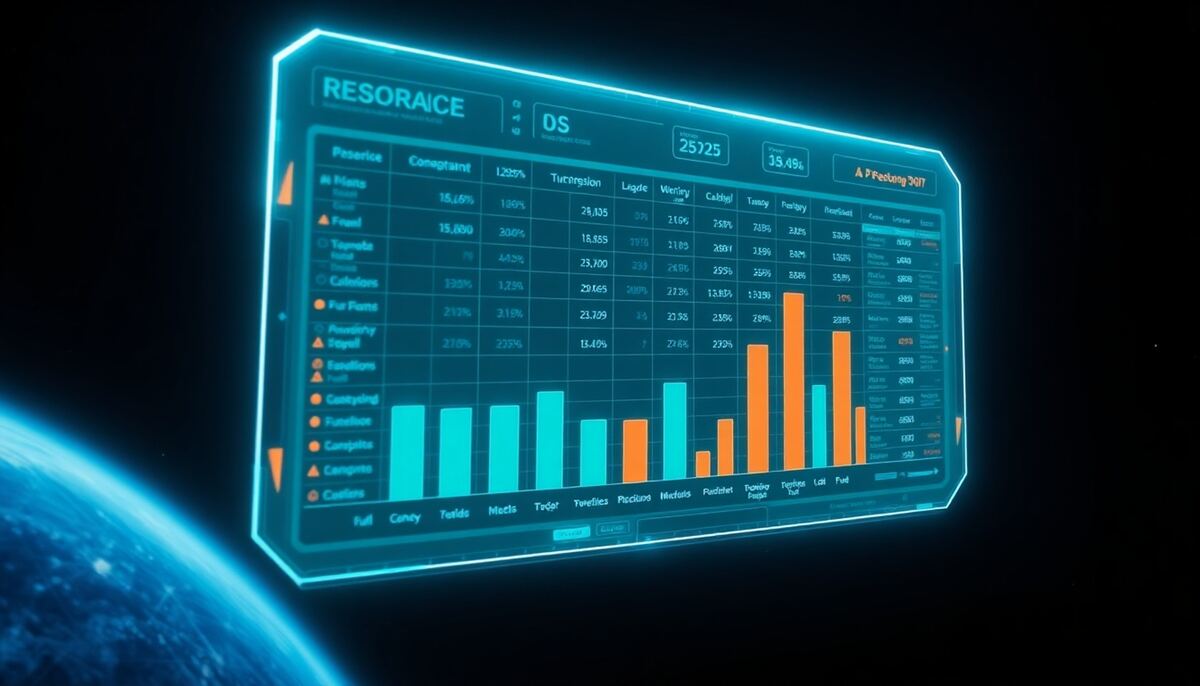
Before you optimize anything, you need an accurate picture of where your deuterium actually goes. Most players guess; good players measure. Open a spreadsheet or use any note-taking tool and build a simple ledger with two columns: production and consumption.
Production side: Sum the hourly output of all your Deuterium Synthesizers across every planet and moon. Do not use the in-game total blindly — verify each planet's actual output, because temperature directly cuts into synthesizer efficiency. A synthesizer at the same level produces dramatically more on a cold planet than on a hot one.
Consumption side: This is harder to track intuitively, so break it into categories:
- Research: Hyperspace Drive, Hyperspace Technology, and Astrophysics are the biggest laboratory consumers. One level of Hyperspace Technology at high levels costs more deuterium than most players realize. Sum up your planned research queue for the next two weeks and divide by the time horizon to get a daily research burn rate.
- Fleet fuel: Every ship has a base fuel consumption per 10,000 units of distance traveled. Estimate your average daily flight distance multiplied by your fleet composition. If you run scheduled fleetsaves, include that fuel too — saving your fleet every night is not free.
- IPMs and Plasma Bombers: Offensive missile use and Deathstar/Plasma bombing campaigns are expensive deuterium events. Budget them separately as "campaign costs" rather than rolling them into daily consumption.
- Recyclers: If you are an active recycler, these ships have non-trivial fuel costs at scale.
Once your ledger is built, calculate your daily surplus or deficit. If you are running a deficit, you need cold colonies, merchant trades, or a reduction in research pace — and the ledger tells you exactly how large the gap is, which determines which solution is proportionate.
Revisit the ledger every time you add planets, research new drive technologies, or significantly change your fleet size. It is a living document, not a one-time calculation. For broader multi-planet resource planning context, the guide on multi-planet logistics covers complementary coordination strategies.
Cold Colony Infrastructure

Temperature is the single most impactful variable in deuterium production, and it is also the one variable most players accept passively rather than engineer deliberately. The deuterium synthesizer formula in OGame gives a production bonus for every degree below 0°C on the planet surface. Cold planets — those in the outer galaxy slots, particularly slots 12-15 — can produce 50% or more deuterium than an equivalent synthesizer on a hot inner-system planet.
The strategic implication is clear: dedicate your coldest colonization slots exclusively to deuterium production. These are your "cold colonies," and they operate on a different build order than your raiding or research planets.
Cold colony build priority:
- Robotics Factory to 10 first — everything else upgrades faster.
- Deuterium Synthesizer to the highest level your energy can support.
- Solar Plant / Fusion Reactor sized to cover the synthesizer's energy demand with a modest buffer.
- Shipyard to at least 1 so the planet can receive and launch Recyclers or Cargos for deuterium transport.
- Skip or minimize Metal Mine and Crystal Mine — you have other planets for that. Storage buildings at levels sufficient to hold roughly 24 hours of production before fleetsave transport is enough.
On OGames' Andromeda universe each planet comes with +500 additional fields, and Proxima also grants +500 fields, giving you more than enough room to stack synthesizer levels without sacrificing other infrastructure. Nebula's +200 fields requires slightly more deliberate planning but is still workable.
Cold colonies compound over time. A planet slot-14 colony with a Synthesizer at level 25+ on a -100°C planet can output three to four times what a slot-4 colony at the same level produces. Two or three such planets can completely reverse a deuterium deficit for a medium-sized fleet, turning the resource from a bottleneck into a competitive weapon you can spend aggressively.
One practical note: when you are evaluating colonization targets, always check the listed temperature before committing. Abandon and recolonize if necessary early in the game — the opportunity cost of keeping a warm outer-slot planet is measured in tens of thousands of deuterium per day at high synthesizer levels.
Trading and the Merchant
The in-game merchant allows you to trade resources at fixed exchange ratios. The standard OGame ratio treats metal at 1:1, crystal at 1.5:1, and deuterium at 3:1. This means one unit of deuterium is worth three units of metal in merchant trades. For players with efficient Metal Mines and Crystal Mines generating surplus, this is the most immediate lever for closing a deuterium gap.
When to use the merchant:
- You have metal or crystal surpluses sitting idle for more than a few hours. Idle resources sitting in storage are an opportunity cost — converting surplus crystal to deuterium at the 1.5:3 ratio is almost always better than leaving it unspent.
- You are approaching a major fleet action and want to top off your war chest without waiting for synthesizer production to accumulate.
- You are deep in a research tier where labs are consuming deuterium around the clock and your synthesizers are temporarily outpaced.
When not to use the merchant:
- If you are regularly trading large volumes of metal and crystal for deuterium, your cold colony infrastructure is insufficient. The merchant is a tactical tool, not a structural solution. Fix the root cause.
- Do not trade deuterium away for metal or crystal unless you are executing a very specific ship-building sprint and have a verified deuterium surplus extending weeks ahead. Deuterium scarcity bites unexpectedly; metal and crystal scarcity is far easier to solve through raiding.
For players on OGames, the Dark Matter weekly bonuses (1,000 DM in Andromeda, 10,000 in Nebula, 50,000 in Proxima) give you access to commander abilities and other features that can speed up resource logistics — but DM itself is not a deuterium substitute. Spend it where the mechanical leverage is highest, such as on fleet-saving automation or production officers, rather than on resource purchases that infrastructure should be providing.
Alliance trading — player-to-player resource transfers — is another powerful tool. If your alliance has players heavy in metal production, a standing arrangement where you supply deuterium for their expeditions and they ship crystal to your synthesizer planets can be mutually beneficial. This kind of structured internal market within an alliance is a mark of serious coordination, and it's covered in more depth in the guide on alliance warfare and politics.
War Chest Planning
A war chest is a deliberate deuterium reserve maintained above your rolling production float — not just "what happens to be in storage," but a calculated buffer sized to specific military objectives. Most players never explicitly plan a war chest, which is why most players run dry at the worst possible moment.
The calculation is straightforward in principle: estimate the total deuterium cost of your planned campaign and hold that amount in reserve before you commit to opening hostilities.
For a typical offensive campaign involving:
- Initial probe wave across 15-20 target systems
- Three to five attack waves with a Battleship-class fleet
- Recycling runs to collect debris from successful hits
- Defensive fleetsave during any counterattack window
You are looking at a minimum of 50,000-200,000 deuterium depending on galaxy distance and fleet composition, with the upper end reserved for cross-galaxy operations against well-defended targets. Large-scale alliance warfare — ACS attacks coordinating multiple fleets — can multiply these costs severalfold.
Building the war chest: Set a savings target based on your campaign estimate. Add 30% as a contingency for longer-than-expected engagements or unexpected counter-deployments requiring emergency fleetsaves. Once you hit the target, lock those resources — meaning fleetsave them away from your normal production planets, clearly earmarked.
Do not spend from the war chest on research or ship construction once the campaign is underway. Those are peacetime expenditures. Mid-campaign resource diversion is how offensives stall.
For overnight resource accumulation strategies that feed into war chest building, the guide on overnight resource management has detailed fleetsave and storage configurations worth reading before your next serious campaign.
Deuterium on Fast Fleet Universes
Everything described above applies at standard OGame pace. On fast fleet universes like OGames' Nebula (99x), Andromeda (50x), or Proxima (200x), the same mechanics operate under radically compressed timescales, and several specific adjustments are necessary.
Flight frequency multiplies consumption: At 50x fleet speed, you can launch and return from a mid-galaxy target multiple times per hour. An active evening session that would represent one or two attacks in a 1x universe becomes ten or twenty attacks. The fuel line on your ledger scales accordingly. Cold colony levels that would be comfortable in a slow universe are often inadequate by the second week in a fast one.
Synthesizer levels need to race research harder: In fast universes, research completes quickly, meaning your Hyperspace Technology and drive levels climb fast — and so does your per-mission fuel cost. Your synthesizer level needs to keep pace with your drive research, not lag behind it. A common mistake is maxing drive tech early for the flight-time reduction without matching synthesizer output growth, creating a structural deficit that worsens with every new tech level.
Cold colonies need to come online fast: In Proxima or Nebula, you can colonize and develop a cold planet to meaningful synthesizer levels in a matter of hours. There is no excuse for deferring cold colony setup past the first week. Planet slots 12-15 in outer galaxies should be targeted for colonization in your first expansion wave specifically for deuterium production.
The debris field math changes: OGames' Proxima has 80% ship debris and 32% defense debris — among the highest debris rates available. When you win a fight in Proxima, the debris field generated is enormous, and recycling it returns metal and crystal that can be immediately traded to the merchant for deuterium. In high-debris universes, aggressive combat is itself a deuterium procurement strategy: win fights, recycle the field, convert surplus metal and crystal to deut. The resource loop is faster and more violent than in slower universes, but it rewards players who have already built the cold colony base to sustain the combat tempo.
Moon operations also interact with the deuterium economy in fast universes. A Lunar Base with a Jump Gate dramatically reduces fuel costs for fleet repositioning, particularly for players running resources between a cold outer-galaxy colony and a combat staging planet. If you are not yet building toward Jump Gates on your key moons, the guide on advanced moon operations explains the full strategic value in detail.
For players climbing the rankings and looking for a systematic edge over opponents, deuterium management is often the differentiator that does not show up in the points table but absolutely shows up in who can sustain operations and who goes dark after one bad engagement. The resource is finite, it is the most expensive to trade for, and it is the most punishing to run out of. Build the infrastructure, track the ledger, hold the reserve — that discipline compounds every week you play.
FAQ
What is the best planet slot for a deuterium colony in OGame?
Slots 12 through 15 in any galaxy consistently produce the coldest surface temperatures, which directly increases Deuterium Synthesizer output. Slot 15 is typically the coldest available colonization target. When choosing between two cold slots, always check the actual listed temperature rather than assuming slot number alone determines production — there is natural variation within the outer range.
How much deuterium does a Battleship consume per mission?
Base Battleship fuel consumption is 500 deuterium per 35,000 km of distance (one unit of "distance" in OGame terms scales with galaxy and system offset). A cross-galaxy trip of six galaxies at maximum combustion drive level can cost several thousand deuterium per ship in the fleet. Larger fleets and longer distances multiply linearly. Use a fuel calculator with your exact drive level to get precise figures for your planned routes.
Is it worth using the merchant to buy deuterium with metal?
The standard exchange (3 metal = 1 deuterium via the 1:3 ratio) is mechanically unfavorable compared to simply mining more or building cold colonies. However, if you have a significant metal surplus — common for mid-game players with high Mine levels but limited expansion — using the merchant to convert idle metal into operational deuterium is better than leaving the surplus sitting. Use it tactically, not as your primary supply strategy.
How do I manage deuterium shortages during a high-level research sprint?
Research sprints — particularly Hyperspace Technology at levels 10 and above — can drain deuterium reserves faster than synthesizers replenish them. The correct response is to front-load deuterium reserves before starting the sprint (build a two-week buffer), temporarily reduce fleet mission frequency to cut fuel expenditure, and if necessary pause synthesizer energy allocation issues by upgrading Solar Plants or Fusion Reactors first. Never start a major research push without checking whether your production covers both the lab cost and your minimum fleet operational needs.
Do OGames' universe multipliers affect deuterium production as well as consumption?
Yes. The economy multipliers in OGames universes (50x in Andromeda, 99x in Nebula, 200x in Proxima) apply to all resource mines including the Deuterium Synthesizer. This means your synthesizer produces proportionally more, but your fleet fuel costs and research costs also scale with the same multipliers. The relative balance between production and consumption stays similar to vanilla OGame — what changes is the absolute volume and speed of the resource cycle. Cold colony strategy remains equally important because the temperature production bonus applies on top of the economy multiplier, making the cold-versus-hot differential proportionally larger in high-multiplier universes.
If you want to put these strategies into practice in a live universe, register on OGames and pick the universe that matches your available time — Andromeda for steady progression, Nebula for an intense mid-speed experience, or Proxima if you want to see the full deuterium economy play out at maximum tempo. The infrastructure decisions you make in the first week will define your deuterium situation for the rest of the server.