
When your metal mine hits level 40 and the next upgrade costs more deuterium than three months of production will generate, OGame is quietly telling you something: the builder phase is over. The players who stagnate here grind the same loop forever; the veterans who thrive understand that late game is an entirely different game played on the same board. End-game OGame is about military dominance, rank politics, alliance power projection, and the personal legacies that outlast any single server season.
When the Building Slows Down — And Why That Is a Good Thing

Mine scaling in OGame uses an exponential cost formula. Each additional level of a resource building costs roughly 1.5 times the previous level in raw resources, but the output gain is linear per level. At the upper ranges — Metal Mine 38+, Crystal Mine 32+, Deuterium Synthesizer 28+ — the return-on-investment window stretches into weeks or months even on accelerated servers. Most players call this the wall. Experienced players call it the starting gun.
The moment you stop obsessing over the next mine upgrade is the moment you can redirect attention to the three levers that actually separate rank-1 players from mid-table farmers: fleet tonnage, points efficiency, and political positioning. Your mines will never stop generating resources; they just stop being your primary source of decision-making. Expeditions, farming, alliance tribute, and marketplace arbitrage collectively dwarf what additional mine levels would have produced anyway — and they require active play, the kind that makes late-game sessions genuinely engaging rather than mechanical.
A practical checkpoint: if your biggest daily decision is still "which building to queue next," audit your fleet income. On a well-run end-game account, expedition returns and farm profits should be outpacing mine income within the same 24-hour window. If they are not, fleet investment is the bottleneck, not mine level. Shift budget accordingly before worrying about that next synthesizer upgrade.
The Military End Game: Building a RIP Fleet That Actually Matters
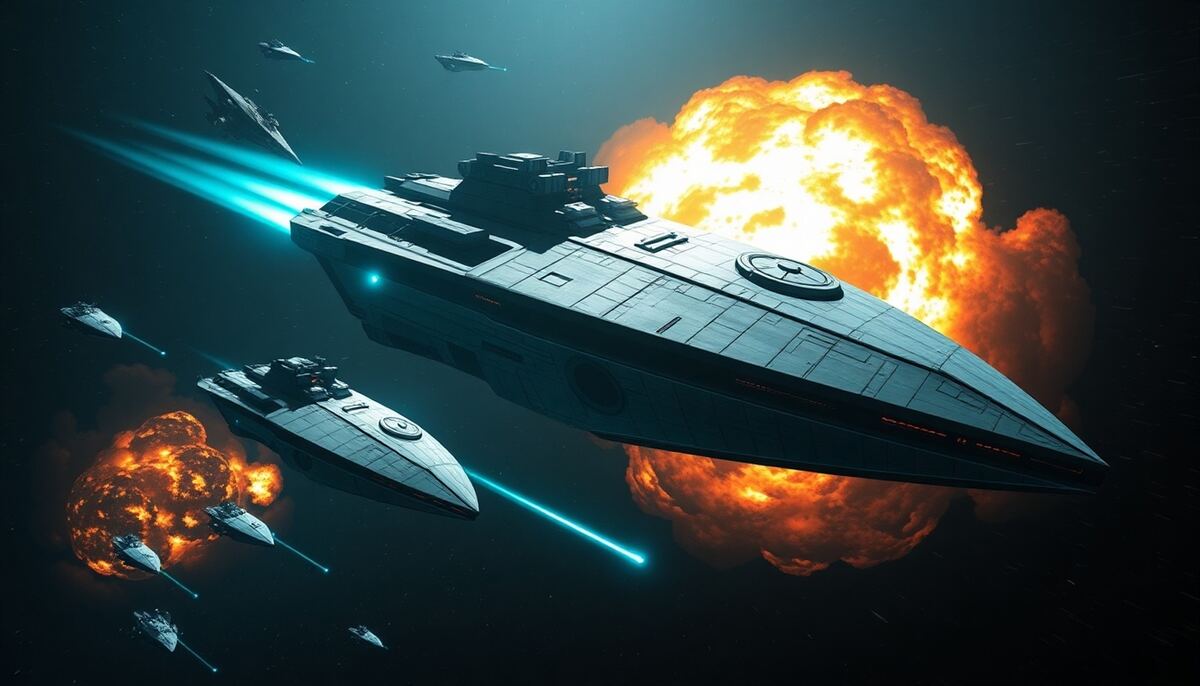
The Death Star — universally called RIP (Robotic Interplanetary Projectile in older server nomenclature) — is the singular status symbol of late-game OGame. A single RIP costs 5,000,000 metal, 4,000,000 crystal, and 1,000,000 deuterium to build. Its 120,000,000 structural integrity and rapid-fire advantages against battlecruisers and destroyers make it the anchor of any serious military fleet. Building one is not a milestone; building enough is.
What constitutes "enough" depends entirely on your target. Casual end-game players park 5–10 RIPs as a deterrent and a morale statement. Players contesting top-10 rankings need fleets measured in the dozens, supported by appropriate battleship and battlecruiser screens. True rank-1 campaigns — discussed in the next section — often demand RIP counts in the hundreds supported by thousands of support ships, particularly on speed universes where build times compress dramatically.
The critical strategic mistake most players make when transitioning to military end-game is building RIPs without a corresponding support fleet. A naked RIP stack is actually vulnerable: bombers and destroyers with rapid-fire bonuses chew through them when no battleships or battlecruisers absorb incoming fire. The standard military composition pairs every 10 RIPs with a screen of 500–1,000 battleships, a matching layer of battlecruisers for flexibility, and enough light fighters to pad structural hit absorption. The exact ratio shifts depending on your combat technology level and whether you are fighting defensively or projecting power across the galaxy.
Lifeform technology trees, available on OGames, further modify these calculations. Certain lifeform bonuses accelerate combat unit production or reduce fleet fuel costs, which meaningfully changes how quickly you can regenerate losses after a major engagement. Research these trees with military goals explicitly in mind once you enter the RIP era — the passive bonuses compound at the scale late-game accounts operate at.
The Rank One Campaign: What It Actually Takes

Rank 1 in OGame is not purely a function of having the most points. Points are the scoreboard; strategy, timing, and political maneuvering determine who actually holds the top spot and for how long. Understanding how the ranking system works is the foundation of any serious late-game campaign.
OGame rankings aggregate three sub-scores: economy (buildings + research), fleet, and defense. Military players can hold top-5 fleet rankings while sitting mid-table overall because their economy score lags. The inverse is also true: pure builders who never invested in military look impressive until someone fleet-saves poorly and loses everything. Sustainable rank-1 requires balance — not equal investment in all categories, but enough presence in each that no single category becomes a catastrophic weakness.
The rank-1 campaign typically unfolds in three phases. First, eliminate or neutralize the current rank-1 player through direct military action or coordinated alliance pressure — you need to close the gap, and incremental building alone rarely does it. Second, farm aggressively to convert military wins into resource surpluses that fund rapid construction. Third, hold position while rivals attempt the same disruption tactics on you. That third phase is where espionage, phalanx operations, and reliable fleet saves become existential skills rather than optional tools. Our counter-espionage guide covers the defensive techniques that protect number-one accounts from the constant probe traffic that inevitably follows.
On OGames speed universes, this campaign compresses significantly. In Proxima (200x economy, 200x fleet speed), what would take months on a standard server plays out in weeks. Players who understand this compression win early by treating the server like a sprint rather than a marathon from day one. If you are reading this and still in the mid-game phase, shifting your mindset to late-game objectives now — before mines cap — is the single biggest strategic advantage available.
The rankings climb guide goes deeper on the mechanics of scoring efficiency and how to time major fleet deployments to maximize point gain during key ranking windows.
Alliance Mega-Projects: Power Beyond Individual Accounts
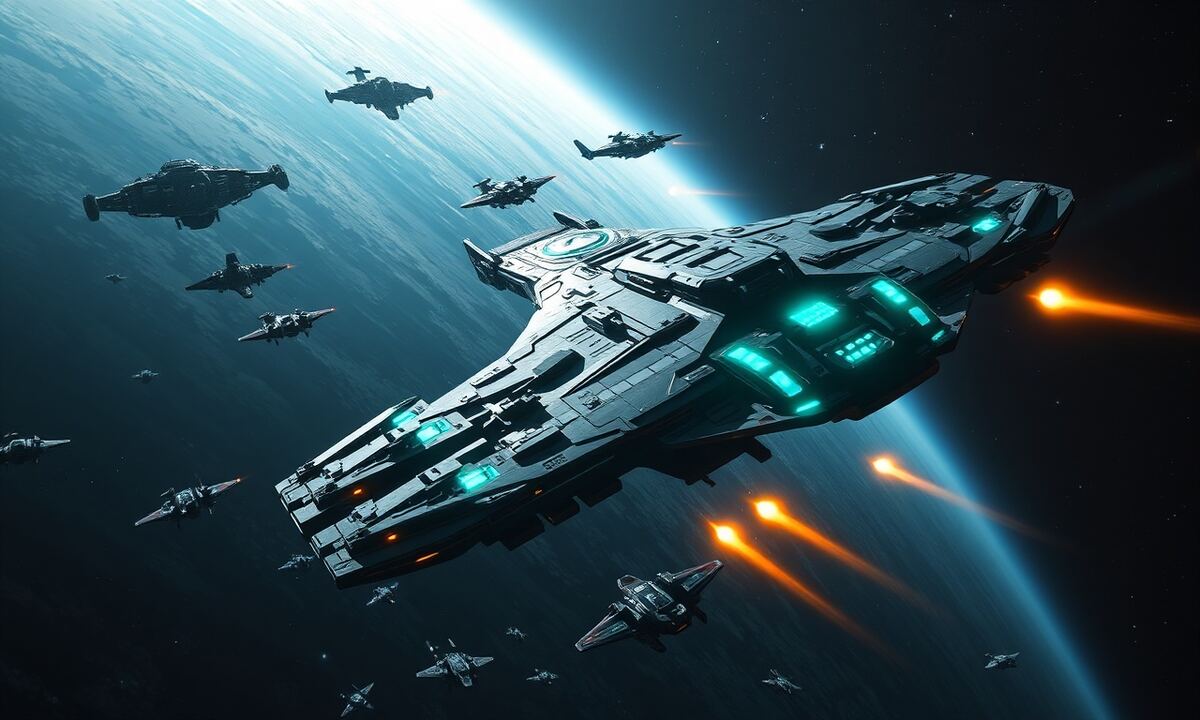
Individual accounts hit ceilings. Alliance meta-game does not. The most ambitious late-game projects in OGame history have been alliance-level campaigns: coordinated galaxy domination, alliance combat records, mutual defense pacts covering entire server populations. These are the projects that generate the stories players retell years later.
Galaxy domination — holding colonies or moons in a majority of systems within a target galaxy — is the canonical late-game alliance project. It requires coordinated colonization planning, defensive fleet coverage across dozens of systems, and an intelligence operation sophisticated enough to detect threats before they materialize. On a 9-galaxy server like OGames, a serious alliance might target galaxy control in 2–3 galaxies as a medium-term objective rather than attempting server-wide saturation immediately.
ACS (Allied Combat System) operations are the military expression of alliance power. A coordinated ACS strike pools fleets from multiple players into a single attack wave, enabling hits that no individual account could mount alone. ACS defense works identically — multiple allied fleets combine to hold a position against superior individual attackers. Mastering ACS timing, communication, and fleet composition across alliance members is genuinely complex and represents the highest-skill-ceiling activity in OGame multiplayer. Our alliance warfare and politics guide breaks down how successful alliances structure these operations without coordination failures costing everyone their fleets.
Alliance resource pools are another underutilized late-game tool. Veteran members farming and expeditioning at scale can funnel surplus resources to newer members still building infrastructure, dramatically accelerating overall alliance power growth. This informal economy — sometimes formalized through internal trade agreements — is what separates dominant alliances from collections of individual players sharing a tag.
For players in leadership positions, the late game becomes partly a management challenge. Motivating active members, mediating internal conflicts, negotiating non-aggression pacts with rival alliances, and making strategic decisions about when to fight versus when to consolidate — these are skills that have nothing to do with mine levels or fleet tonnage. They are the skills that actually determine whether an alliance thrives or fragments under pressure.
Mentoring, Community Roles, and the Server Legacy Game
Not every veteran's late-game ambition is rank 1. Some of the most influential OGame players in any server's history are remembered not for point totals but for what they contributed to the community around them. Mentoring newer players, organizing alliance recruitment, writing guides, moderating community channels — these roles create lasting impact that outlives any single account or server season.
The buddy system on OGames formalizes one version of this: linking accounts so that both players receive bonus resources for active play, creating a natural mentorship incentive structure. Veterans who take on buddy relationships with newer players gain a meaningful late-game activity — helping someone navigate the early builder phase, teaching espionage basics, explaining fleet save mechanics — while newer players get the kind of experienced guidance that dramatically reduces the painful learning curve OGame is notorious for.
Beyond individual mentorship, late-game veterans are often the axis around which server culture forms. How bashing rules are respected, whether diplomacy norms hold, whether alliances engage in good-faith negotiations or scorched-earth politics — these outcomes are heavily influenced by how experienced players choose to behave. The player who farms fairly, honors agreements, and plays vigorously but without toxicity does more for long-term server health than any rule enforcement can accomplish from the top down.
For players approaching the end of a server's active season — when population has thinned and competition has stabilized — this community-oriented late game often becomes the most genuinely rewarding phase of play. You have the resources and influence to shape the server's remaining narrative rather than grinding toward a conclusion that is no longer in doubt.
Overnight Resource Management and Fuel Economy at Scale
Late-game accounts generate and consume resources at a scale that makes inefficiency expensive in absolute terms even when percentage margins seem small. A mid-game player losing 5% of overnight production to poor fleet save routing loses relatively little. A top-10 account losing the same percentage loses an amount that would fund a medium-sized fleet ship. Optimization at this scale is not obsessive — it is financially rational.
Deuterium consumption becomes the critical constraint. RIP fleets burn enormous quantities of deuterium on any mission beyond the home system. Every expedition, every farming run, every defensive repositioning carries a fuel cost that scales with fleet tonnage and distance. Late-game players who have not tightly optimized their deuterium economy find themselves fuel-poor exactly when they can least afford it — during sustained military campaigns when deuterium is simultaneously being consumed by combat missions and stockpiled as a strategic reserve against supply disruption.
Multi-planet logistics becomes a genuine operations discipline at this level. With colonized planets spread across the galaxy, resource routing, construction queuing across multiple facilities simultaneously, and coordinating fleet positions for both offensive and defensive readiness requires systematic thinking. Players who treat their account as a single entity centered on their homeworld hit hard limits; players who manage it as a distributed network with explicit roles for each planet — production hub, military staging point, expedition base, trading node — extract dramatically more efficiency from the same infrastructure. The multi-planet logistics guide covers the frameworks veteran players use to manage accounts at this complexity level.
Late Game Arrives Fast on Speed Servers — Plan Before You Need To
Everything described in this guide arrives faster than most players expect, and on speed universes it arrives before many players realize they are there. OGames Andromeda runs at 50x economy and 50x fleet speeds; Nebula runs at 99x; Proxima at 200x. On Proxima, construction timelines that would take months on a standard server complete in hours. A player starting today and playing actively could reach mine-cap territory within weeks of account creation.
This compression is a feature, not a quirk. It means the interesting, high-skill parts of OGame — the military planning, the political positioning, the alliance strategy — arrive while the server is still young and competitive rather than after years of slow building have thinned the population. The strategic advice in this guide is not theoretical future planning for most OGames players; it is immediately applicable guidance for where accounts are right now or will be in the very near term.
The practical implication: start planning your late-game objectives before you need them. Decide whether your primary goal is rank competition, alliance leadership, RIP fleet supremacy, or community contribution. Each path requires different decisions now — research priorities, colonization patterns, alliance affiliations, and resource allocation all look different depending on where you are pointed. Players who drift into late-game without a defined objective tend to become inactive within weeks. Players with a clear mission sustain engagement through the entire server season and often come back for the next one.
If you have not yet chosen your universe, review the comparison carefully. Andromeda's 5,000 DM signup bonus and 50x speeds suit players who want competitive mid-game content that lasts. Nebula's 99x settings with 10,000 weekly DM accelerate progression without sacrificing the alliance-building window. Proxima at 200x is essentially a late-game server from week one — by design, for players who want to live in the RIP era immediately. Each universe runs 9 galaxies with up to 5,000 players, providing the population density that makes late-game politics and rank competition genuinely meaningful.
FAQ
At what point should I stop upgrading mines and shift to military investment?
There is no universal mine level that triggers the shift, but the practical indicator is return-on-investment timeline. When the next mine upgrade will take longer to pay back in additional production than it would take to build three or four fleet ships that generate equivalent resources through farming, the fleet investment wins. For most players this crossover happens somewhere between Metal Mine 35–40, Crystal Mine 30–35, and Deuterium Synthesizer 25–30 depending on server speed. On OGames Proxima at 200x, this calculation compresses dramatically and the military transition often makes sense much earlier.
How many RIPs do I need to be competitive in end-game combat?
Fleet composition matters as much as RIP count. A screen-supported fleet of 20–30 RIPs backed by 1,000+ battleships is meaningfully more combat-effective than 50 naked RIPs. For rank-1 contention on a populated server, realistic late-game fleets typically range from 50–200 RIPs depending on server age and competition level. On OGames speed universes, build enough to be a credible deterrent first — typically 10–20 RIPs — then scale based on who you are targeting and what the rank gap requires.
What is the best way to run ACS attacks as an alliance?
Effective ACS requires three things: synchronized arrival timing (all fleets hit simultaneously, not sequentially), a pre-agreed composition so ships do not redundantly fill the same combat roles, and clear communication protocols for abort conditions. The most common failure is someone's connection lagging during fleet dispatch, resulting in a partial strike that tips off the target and wastes fuel. Assign a fleet coordinator per operation, use a private channel for real-time communication, and always define a recall window that allows full abort if target behavior changes after fleets are dispatched.
Can you actually build a top-ranking account without spending money on Dark Matter?
Yes. OGames gives Andromeda players 5,000 DM at signup plus 1,000 weekly free, Nebula players 10,000 plus 10,000 weekly, and Proxima players 20,000 plus 50,000 weekly. The weekly free DM alone funds meaningful commander and officer usage without purchase. The ranking systems reward active play and strategic decisions, not DM expenditure. Players who manage their free DM allocations efficiently — prioritizing commanders that multiply fleet or production output — compete effectively against paying players. The no-pay-to-win guide covers exactly how to maximize free DM value.
What keeps late-game OGame interesting when building is mostly done?
The honest answer is other players. OGame's late game is almost entirely a PvP and political game. The tension of knowing a rival alliance is probing your moons, the satisfaction of a perfectly timed fleet save that lets a poorly-positioned attacker crash into your defenses, the negotiation dynamics of a server-wide non-aggression pact that everyone knows will eventually break — none of that is possible on a solo builder account. Players who invest in alliances, rivalries, and server politics consistently report the highest engagement in late game. If late game feels stale, the missing ingredient is almost always other people.
If you are ready to experience what late-game OGame actually feels like on a server built for it, register on OGames and choose the universe that matches your ambitions. The fleet is already forming — come claim your sector before someone else does.