
Expeditions are not a passive afterthought — they are a structured resource engine that, when properly optimized, can outperform farming in raw throughput for mid-to-late game players. The catch is that most players send the wrong fleet, to the wrong depth, at the wrong time, and wonder why their returns feel random. This guide fixes that: concrete fleet composition templates by point bracket, a full breakdown of pathfinder mechanics, and a rigorous look at how to think about loss amortization so that every disaster expedition still makes economic sense.
Beyond Basic Expeditions: What the Formula Actually Rewards

The expedition system in OGame is driven by two core variables: the number of expedition slots you have unlocked and the size of the fleet you send. Most guides stop there. The veteran understanding goes deeper.
Find magnitude — the maximum resources, ships, or dark matter you can discover on a single expedition — scales with fleet points up to a hidden cap. That cap is not absolute; it is relative to your universe's top-fleet ranking. Specifically, the game uses the top-fleet player's point total as a reference scalar. In practice this means:
- Early game (under 50k fleet points): Every additional ship you send meaningfully increases your find ceiling. Ship finds will often be small frigates or recyclers.
- Mid game (50k–500k fleet points): Diminishing returns begin. Resource finds plateau unless you are in the top quartile of fleet scores. Ship finds can now include battleships and above.
- Late game (500k+ fleet points): You are effectively competing with the universe cap. Sending more ships than the minimum required to hit the cap wastes fuel and increases loss exposure without improving expected value.
There is also a depth dimension. Expedition duration (1–8 hours of travel time to system 16) does not affect find size — only the number of expedition slots you occupy at any moment matters for throughput. Shorter travel times let you recycle slots faster. This is why the conventional wisdom of "always send to system 16" is tactically wrong for players who have more fleets than slots.
The outcome table has nine possible results: resource find, ship find, dark matter find, pirates attack, aliens attack, fleet lost (black hole), nothing, delay (fleet returns late), and early return. The weights of these outcomes are fixed and not influence by fleet composition — only the magnitude of positive outcomes scales with fleet size. That asymmetry is everything. You cannot reduce the probability of a loss event; you can only ensure that when a loss happens, the fleet you lost was cheap relative to its historical return.
Find Scaling With Fleet Size: Point Bracket Tables

The following tables are derived from community-verified OGame formulas and are expressed in qualitative tiers because the exact scalar is universe-top-fleet dependent. Use these as calibration guides, not absolute numbers.
Resource Find Tiers
| Fleet Points Sent | Resource Find Tier | Notes |
|---|---|---|
| Under 1,000 | Micro (hundreds of units) | Barely covers deuterium cost |
| 1,000–10,000 | Small (thousands) | Worthwhile only with many slots |
| 10,000–100,000 | Medium (tens of thousands) | Core farming bracket |
| 100,000–500,000 | Large (hundreds of thousands) | Requires cargo capacity planning |
| 500,000+ | Capped (universe-relative) | Sending more rarely improves finds |
Ship Find Tiers
| Fleet Points Sent | Typical Ship Find |
|---|---|
| Under 5,000 | Light fighters, solar satellites |
| 5,000–50,000 | Cruisers, recyclers, espionage probes |
| 50,000–200,000 | Battleships, destroyers, bombers |
| 200,000+ | Destroyers, battlecruisers, deathstars (rare) |
The critical strategic insight from these tables is that a player at 80,000 fleet points sending 80,000 points per expedition is wasting their entire fleet in one slot. The optimal split depends on how many slots you have. If you have 6 expedition slots, you want 6 distinct fleets each hitting a meaningful find tier — not one giant fleet that saturates the cap and leaves five slots idle or filled with sub-threshold probe fleets.
Composition Templates: What to Actually Send
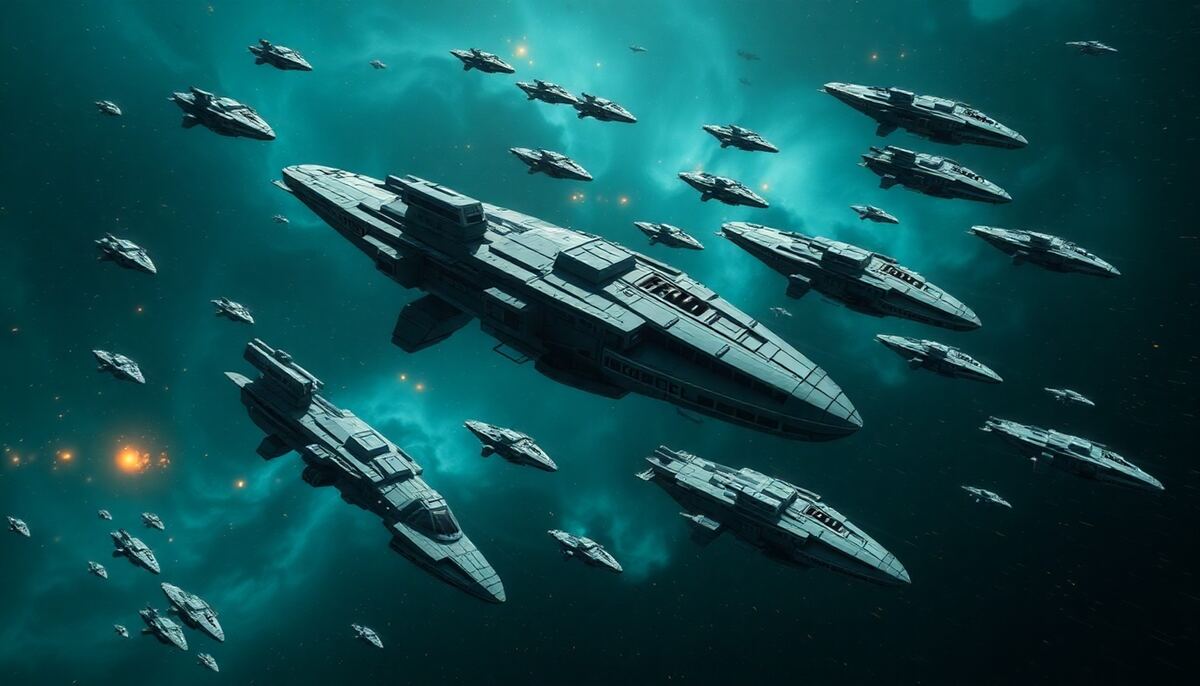
Fleet composition for expeditions is driven by three requirements: combat power (to survive pirate and alien encounters), cargo capacity (to carry finds home), and cost efficiency (to make loss events economically survivable).
The Pathfinder: Your Non-Negotiable Anchor
The pathfinder is not optional for serious expo players. It grants +2 expedition slots and increases the chance of positive outcomes — most critically, it reduces the relative weight of the "nothing" result and increases dark matter find probability. Every expedition fleet should include exactly one pathfinder. Including two pathfinders in the same fleet does not stack the bonus; that second pathfinder's cost is pure dead weight.
The pathfinder also has the best combat stats-per-resource-cost ratio of any ship you would plausibly send on an expedition. Its 10,000 structure points and 200 shield make it a meaningful addition to your combat layer without costing battleship-tier resources.
Early Game Template (Under 50k Total Fleet Points)
- 1x Pathfinder (mandatory)
- 5–10x Large Cargo Ships (cargo layer)
- 5–10x Cruisers (combat layer)
- Optional: 1–2x Espionage Probes (sacrificial; some veterans swear they have no effect, community is split)
Total fleet cost should be recoverable within 3–4 successful expedition returns. This ensures that a black hole event does not set your entire expansion back.
Mid Game Template (50k–300k Fleet Points)
- 1x Pathfinder
- 1x Battleship or Battlecruiser (combat anchor)
- 10–20x Large Cargo Ships
- 5–10x Cruisers
- 2–4x Recyclers (to collect debris from combat outcomes; also adds structure)
At this bracket your ship finds will occasionally include destroyers and battlecruisers. You need enough cargo capacity to actually bring them home — many players forget that found ships travel with your returning fleet but found resources require cargo. Size your cargo layer for the upper end of your expected find tier, not the average.
Late Game Template (300k+ Fleet Points per Slot)
- 1x Pathfinder
- 2–3x Destroyers or 1x Deathstar (combat dominance, minimizes fleet loss events from pirates/aliens)
- 20–40x Large Cargo Ships
- 4–6x Recyclers
At this level your primary goal shifts from maximizing find magnitude (you are already near cap) to minimizing loss events through overwhelming combat power. Alien encounters scale to your fleet's combat value, so there is a point of diminishing returns — but a deathstar virtually eliminates the chance of losing any fleet in a combat event.
Loss Events and Amortization: Thinking in Portfolios

The single biggest psychological mistake expedition players make is treating each run as an isolated event. An expedition fleet that gets swallowed by a black hole feels catastrophic. Viewed correctly, it is a statistical expense that was already priced into your expected value calculation when you decided on that fleet composition.
The loss event probability (black hole) is fixed at approximately 4% per expedition in the base game. Over 25 expeditions, you will statistically lose one fleet. This is not bad luck — it is an operating cost. Your job is to price it correctly.
The Amortization Formula
For a given expedition fleet composition, calculate:
- Average return value per expedition: Sum (probability × value) across all positive outcome types. For your point bracket, this is estimable from the find tier tables above. Track your actual returns for 30+ expeditions and use real data.
- Fleet replacement cost: The total resources needed to rebuild the fleet if it is lost.
- Break-even threshold: Fleet replacement cost ÷ average return value = number of expeditions to break even.
If your break-even threshold is under 20 expeditions, your composition is healthy — the fleet pays for itself faster than the statistical loss rate can bankrupt you. If it is over 25, you are over-investing in the fleet relative to the returns it generates.
A practical example: if your mid-game expo fleet costs 500,000 metal equivalent to rebuild and returns an average of 40,000 metal equivalent per run, your break-even is 12.5 expeditions. At a 4% loss rate, you expect to lose it every 25 runs. That means every fleet you send generates ~12 runs of pure profit before statistically expiring. That is a 100% return on fleet investment over its expected lifespan — exceptional by any farming metric.
The Hidden Cost of Over-Engineering
Sending a deathstar on an expedition to "guarantee safety" when your point bracket's find ceiling is capped by a 200,000-point fleet is a classic over-engineering mistake. The deathstar's cost inflates your break-even to 80+ expeditions. You are paying fleet-replacement insurance premiums that exceed the loss cost you are avoiding. Keep composition lean enough that break-even stays under 20.
Expedition Slot Budgeting: The Throughput Equation
Slot count is your true production ceiling. The maximum slots formula in OGame is: base 1 + (Astrophysics level ÷ 2, rounded down) + pathfinder bonus. Pathfinder adds 2 slots while it is on an active expedition — meaning if your pathfinder returns, you temporarily lose those slots. Never let all your pathfinders be docked simultaneously unless you are rebuilding after a loss.
Slot Allocation Strategy
With N active expedition slots, the naive approach is to send N identical fleets. The optimal approach is tiered allocation:
- Primary slots (60% of total): Full composition template for your bracket. These are your primary earners.
- Secondary slots (30% of total): Lighter composition — pathfinder + cargo only, no combat ships. Lower find ceiling but also lower loss cost. These are slot-fillers that keep throughput up when you cannot manage full rebuilds.
- Buffer slot (10% or 1 slot): Keep one slot open or on a very short expedition cycle. This handles unexpected timing gaps, gives you a slot to respond to intel about pirate activity, and ensures you always have capacity to send a fresh fleet immediately after a loss.
Astrophysics investment has one of the best ROI ratios in the game because each pair of levels adds a slot that generates returns continuously. Prioritize it up to at least level 18 (9 base slots + pathfinder = 11 active slots) before worrying about optimizing individual fleet composition.
Travel Time Optimization
Expedition duration is travel time to the target system — the actual expedition wait is fixed at 1 hour. Faster fleets recycle slots faster. The optimal target system for throughput (not find size) is the closest system that still counts as a valid expedition target (system 16 in your home galaxy, one step past the end of inhabited space).
If your fleet speed with current drive technology puts round-trip at under 2 hours, you can theoretically run each slot 12 times per day. At 4 hours round-trip, that drops to 6 runs. Across 10 slots, the difference is 60 runs per day versus 120 — a factor of 2 in total throughput. Drive upgrades that reduce expedition travel time often have higher ROI than adding another combat ship to the composition.
The Expedition Meta on OGames Speed Universes
On OGames private servers, the expedition meta shifts significantly compared to the 1x official universe. In Andromeda, Nebula, and Proxima, economy and research speeds are multiplied 50x to 200x respectively, which has several cascading effects on expedition optimization:
Faster Astrophysics Progression
With Andromeda's 100x research speed and Nebula's 198x, hitting Astrophysics 18 takes days rather than months. This means players enter the multi-slot high-throughput phase of expedition play almost immediately after establishing their first colonies. The entire early-game bracket described in the composition templates above is compressed to roughly the first week of play.
Higher Find Values
Because the universe economy speed scales resource production (and therefore the resource reference points the game uses internally), expedition finds in speed universes tend to be proportionally larger in absolute terms. Nebula's 55% ship debris rate and Proxima's 80% rate also mean that combat outcomes — both your wins against pirates and your losses — generate more debris. Recyclers on your expo fleet are not optional padding; they are actively valuable cargo.
Proxima's 40% moon chance further incentivizes expedition activity: the debris from alien combat outcomes on expeditions can occasionally trigger moon formation if the debris field lands near your home planet. This is a minor but real synergy that moon operations specialists should keep in mind.
Dark Matter from Expeditions
Both Andromeda (5,000 DM at signup + 1,000 weekly) and Nebula (10,000 DM + 10,000 weekly) provide generous DM allocations, but expedition DM finds stack on top of these and are not subject to purchase limits. For players who maximize expedition throughput, DM finds can meaningfully fund commander extensions and officer slots — compounding your expedition efficiency further. Proxima's 20,000 DM weekly baseline already covers most officer costs, making DM finds there primarily a bonus rather than a strategic priority.
If you are tracking your resource economy across multiple planets, the cross-planet logistics of funneling expedition returns to your production hubs is worth systematizing. The multi-planet logistics guide covers how to build efficient distribution routes that prevent expedition cargo from sitting idle on your expedition-launch planet.
The Deuterium Cost Dimension
On speed universes, deuterium production scales with economy speed, but expedition fuel costs also scale with fleet size and travel distance. The deuterium efficiency of your expedition fleet matters more in higher-speed universes because the absolute quantities involved are larger. A full analysis of deuterium economy — including synthesizer optimization and fusion reactor trade-offs — is covered in detail in the deuterium economy guide, but the expedition-specific rule is simple: calculate deuterium round-trip cost and ensure it represents under 15% of your average return value. If it exceeds that, either shorten travel distance or reduce fleet size.
Overnight Expedition Cycles
Speed universes create an interesting overnight optimization problem. With fast construction speeds, players often log off with queues running and fleets on long missions. Expeditions launched before sleeping should have travel times calibrated to return after you wake up — not while you are offline and unable to send the next wave. The overnight resource management guide addresses this in full, but the expedition-specific advice is to stagger your fleet departure times by 15–30 minutes so returns are distributed across your morning login window rather than all arriving simultaneously with full cargo holds you cannot immediately action.
FAQ
Does sending more ships always increase expedition finds?
No. Find magnitude scales with fleet points up to a universe-relative cap tied to the top fleet player's score. Once you have crossed that threshold, additional ships add cost and loss exposure without meaningfully improving returns. The goal is to hit the cap efficiently, not to exceed it. For most universes the practical cap sits somewhere between 200,000 and 500,000 fleet points per expedition fleet.
Should I send a pathfinder on every single expedition fleet?
Yes, with one exception: if you are rebuilding after a loss and temporarily cannot afford a pathfinder, send the secondary fleet without one rather than delaying the slot. But under normal operating conditions, one pathfinder per fleet is mandatory. The slot bonus and outcome weight shift it provides are too valuable to leave on the dock.
How do I recover after a black hole wipes my expedition fleet?
First, confirm your amortization math actually accounted for this possibility — if it did, you have reserves. Immediately reduce all expedition fleets to the minimum viable template (pathfinder + light cargo) while you rebuild. Do not empty all slots to avoid losses; the opportunity cost of idle slots compounds quickly. Rebuild the combat layer first (it is the most expensive component), then restore cargo capacity to full template.
Is the pirate/alien attack avoidable with fleet composition?
No — the probability of encountering pirates or aliens is fixed and independent of your fleet. What composition affects is the outcome of the encounter. Sufficient combat power means you win, generate debris, and potentially gain resources from the fight. Insufficient combat power means losses. The correct response is not to try to avoid combat events but to ensure your fleet wins them consistently and that the replacement cost of any losses is covered by your amortization buffer.
How many Astrophysics levels should I prioritize before worrying about composition?
On OGames speed universes, push Astrophysics to at least level 12 (6 base slots) before over-investing in individual fleet composition. On Andromeda's 100x research speed, you can reach level 12 within the first week. After level 12, alternate between research upgrades and fleet composition improvements. Aim for level 18 as your medium-term target — 9 base slots plus pathfinder bonuses puts you in the high-throughput tier where expedition income becomes a primary economic engine rather than a supplement to mining and farming.
If you are ready to put this theory into practice, register on OGames and choose the universe that fits your play pace — Andromeda for measured growth, Nebula for aggressive mid-game, or Proxima if you want to hit max expo throughput within days of launch. All three universes support full expedition mechanics including dark matter finds, ship finds, and the pathfinder slot bonuses covered in this guide.